-
By Randall C. Resch
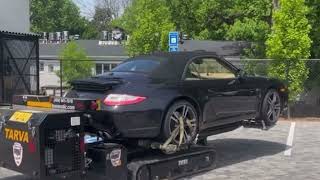
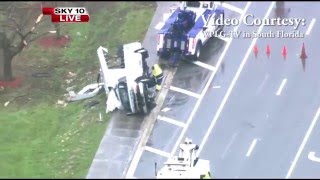
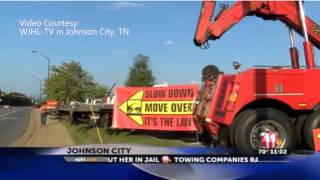
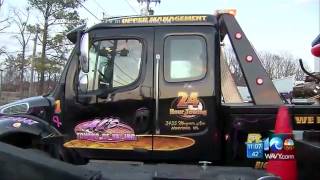
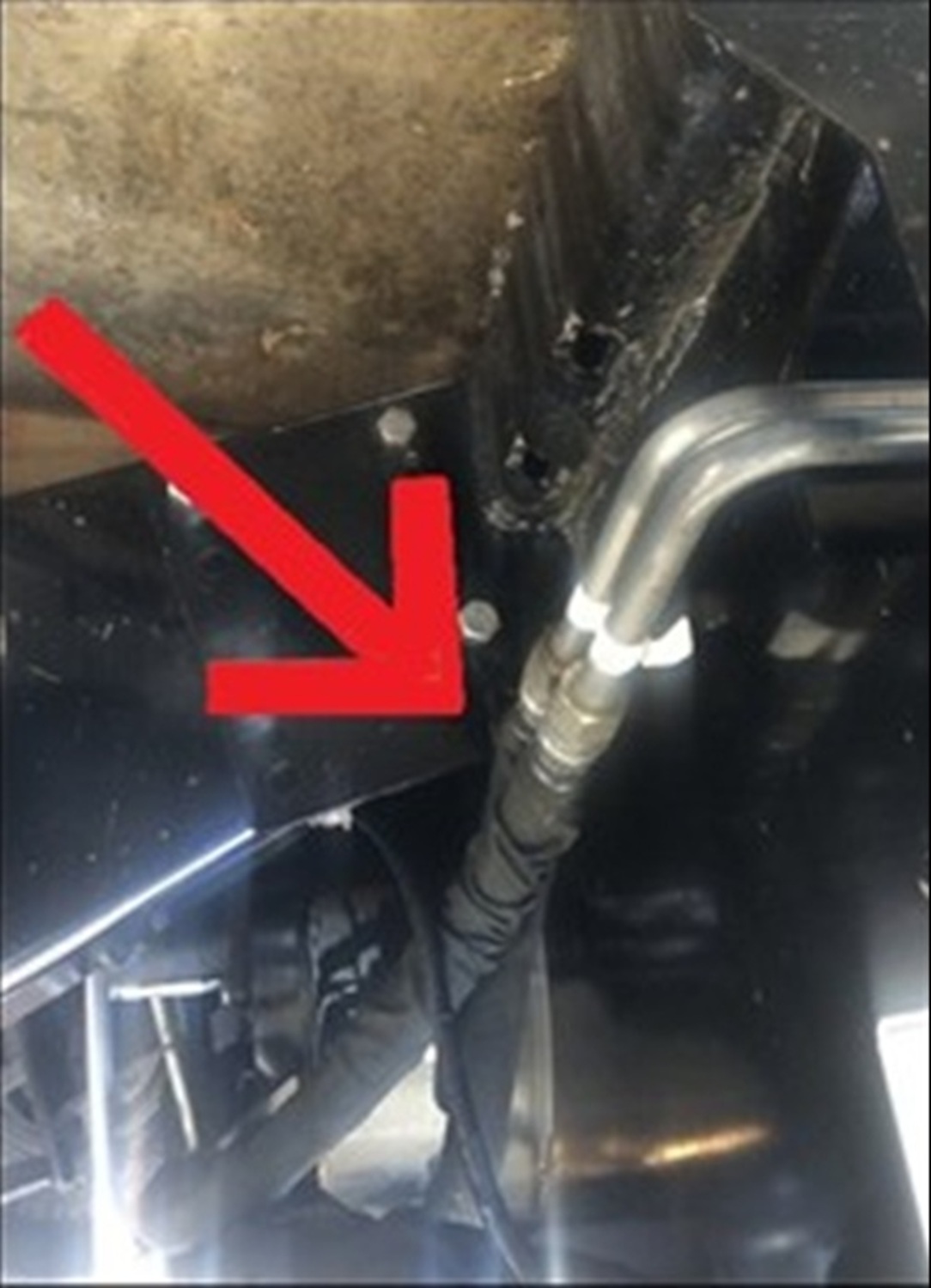
A town’s newspaper headline read, “Tow Truck Spews Hydraulic Liquid, Dropping Car Near Roundabout.” To that I say, “OMG, is the world coming to an end?” When this happens, towers likely know what the cause was. Unfortunately, in this situation, the operator admitted he was “hammering the deck,” causing an underside line to blow.
It’s one of those unintended “Oh Crap” moments when a carrier’s actions “barf” gallons of hydraulic fluid onto the pavement. What happens next is that telltale flurry of workers hastily dumping kitty litter atop the oozing flow.
Do you know what Pascal’s Law is as it regards tow truck hydraulics? Pascal’s Law describes “the process said to create extreme pressure when dense fluids are forced through small-diameter hoses and tubes under pressure.”
There’s a basic principle that governs hydraulics; a principle learned hundreds of years ago. French mathematician Blaise Pascal formulated the theory that “pressure applied to confined liquids acts at right angles to the surfaces of containers holding the fluid.”
Mr. Pascal introduced his concept, suggesting that “oil is virtually non-compressible, where forces applied to the end of an oil-filled tube (or hose) instantly flow to the other end.” What does this mean?
Simply put, if a tow truck’s hoses or tubes are defective, liquids under pressure are bound to burst through. My explanation suggests that hydraulic hoses are “wear items” and require regular inspection and replacement to ensure optimum conditions against bursting.
What’s That Noise?
A similar situation occurred when an operator worked his aged carrier running at high-idle RPM with the PTO engaged. With the carrier situated across from a rental company’s entry, he was actively loading a small forklift when, without warning, a loud “Pssssshhhhht” audibly indicated the sound of a bursting hydraulic hose.
In an instant, the carrier’s winch and deck operations were disabled. A billowing cloud of light-gray smoke filled the surrounding area while a puddle of nasty brown fluid oozed from beneath the carrier’s deck. Because the PTO was still turning, the carrier spewed gallons of fluid before the truck was shut off.
As expected, one of the rental office employees panicked and dialed 911, claiming, “The tow truck’s on fire.” Minutes later, a screamin’ fire rig arrived looking for a fire to fight, but quickly determined the smoke was the direct result of hydraulic fluid soaking the carrier’s hot exhaust. Because the carrier showed signs of extreme wear and poor maintenance, inspectors discovered that a hydraulic hose had repeatedly rubbed against the truck’s frame, sawing a slice into the hose and causing it to burst.
If this situation has ever happened to you, you know just how embarrassing that moment is when all eyes are on you and your still-smoking truck.
Deck Killers
Especially true in carrier operations, one of the more difficult tasks is off-loading vehicles that won’t roll due to all-wheel drive, missing tires and wheels, or wrecks having extensive damage. For carriers not equipped with skates, dollies, or even soapy water, operators resort to “slam-banging” carrier decks back and forth. Ya’ got ta’ know, it’s killin’ the deck! Don’t do it!
The repeated “hammering action” is regularly associated with blown hydraulic lines. Although modern hydraulic systems are designed with flow dividers and relief valves built into PTO systems, hoses aren’t designed to take the abusive beating created by “hammering carrier decks,” in likeness to Pascal’s Law.
Hydraulic lines are designed to have great holding power under the PSI produced by a system’s PTO pump. Factors such as temperature and fluid type affect a line’s pressure tolerance, where high-pressure hose failure occurs between operational ranges of 2,100 and 5,000 PSI, depending on the application. When deck hammering is initiated, there’s no telling when hoses will burst.
Resistance Factors
It’s important that towers learn how to use skates properly. For towers who understand the difficulties associated with recovery winching, the same holds true for non-rolling vehicles atop a carrier’s deck. When vehicles don’t roll, the obvious reasons are influenced by the casualty’s weight, combined with friction, lack of motion, and incline.
Equally important, that doesn’t mean soaping the deck or disconnecting the casualty from attachment bridles while raising the deck full-tilt to get vehicles to slide off. The latter is an incredibly dangerous technique typically practiced by lazy and unskilled operators. Note: To do so goes against the grain of industry safety and OSHA guidelines.
In the opening scenario, it occurred in a small Florida town where a local flatbed carrier had one of its hoses let go. But when it’s a “slow news day,” of course some absurd headline will make it to the five o’clock news. Remember, if hoses aren’t maintained, it’s only a matter of time before a line blows. Perhaps the bigger question is, “What’s the cost of cleanup gonna’ be?”
Operations Editor Randall C. Resch is a retired, veteran, California police officer, former tow business owner and industry advocate. As consultant and trainer, he authored and teaches tow truck operator safety courses approved by the California Highway Patrol. For 57-years, he has been involved in the towing and recovery industry. In 29-years, he has contributed more than 800-safety focused articles for American Towman Magazine, TowIndustryWeek.com and POLICE Magazine. He is a frequent seminar presenter and beauty pageant judge at tow shows. In 2014, he was inducted to the International Towing and Recovery Industry Hall of Fame, was the 3rd recipient of the industry's "Dave Jones Leadership Award," and is a member of American Towman’s Safety Committee. Email Randy at rreschran@gmail.com.
-
 By Randall C. Resch
When tow companies advertise themselves as being “full-service,” an important question arises: How prepared are they to serve mobility-challenged motorists?
If a customer called and said, “I’m inside my car, broken down on the highway, and I require a wheelchair,” would your company be able to help?
Consider another scenario. A highway patrol dispatcher requests a tow truck for a disabled vehicle but makes no mention that the motorist is wheelchair-bound. Upon arrival, how will your operator handle the situation?
Persons with physical disabilities can create challenges for tow companies that are not prepared to assist them. Although calls involving mobility-challenged individuals are relatively rare, they can present significant issues for full-service towing companies and auto club providers.
What to Do?
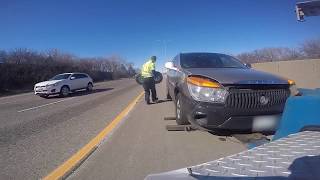
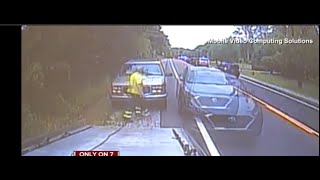
In August 2025, a mobility-challenged, wheelchair-bound motorist and Canadian auto club member experienced a flat tire on the highway. The motorist required a wheelchair for mobility once outside the vehicle but remained seated behind the wheel while waiting for assistance.
After contacting CAA Canada for service, a tow truck was dispatched. Reports indicate the motorist waited approximately three hours for the truck to arrive.
When the operator arrived and contemplated what to do, he advised that he could not tow the vehicle with the motorist seated inside. While that was a reasonable and prudent decision, “not knowing what to do next” became the catalyst for a formal complaint and negative publicity for the industry.
As towers are trained to understand, motorists, customers, and auto club members generally do not ride in towed or transported vehicles for obvious safety reasons. Unfortunately, the motoring public often doesn’t understand those limitations.
As reported by a Canadian news station, the incident portrayed the towing industry in a negative light. Whether fair or not, it highlights the need for companies to seek better ways to serve motorists with disabilities.
Consider the Dangers
While towers may have several options available, it is recommended they never attempt to lift or reposition mobility-challenged individuals. At no time should operators go “hands-on” with these motorists, as improper movements could result in injury or re-injury.
In the case described above, the motorist was stopped on a highway shoulder—what I would consider a classic example of “exigent circumstances.” Consider the additional dangers involved in trying to remove a motorist through the traffic-side door.
Is it really safer to have a wheelchair-dependent motorist outside the disabled vehicle, exposed to traffic hazards, when the safest place may be seated and restrained in a protected vehicle?
What about mobility-challenged motorists who are driving specialty vans? Similar situation. What should be done?
Beyond the Norm
Consider this real-world example.
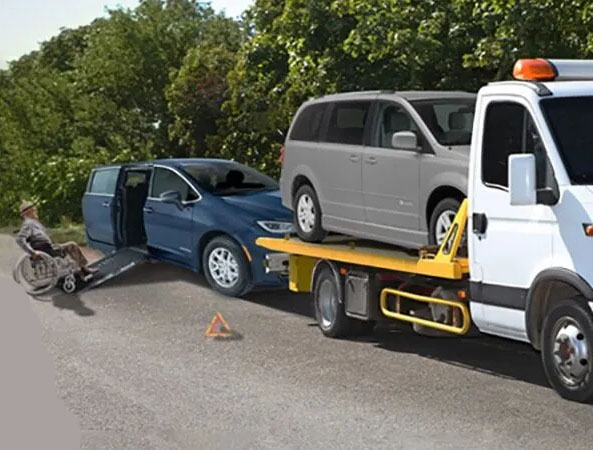
During a nighttime incident, a homeless, diabetic bilateral amputee—missing both legs—was driving through a busy intersection when the rear end of his mobility van locked up, leaving the vehicle unable to move.
As the responding traffic officer, my arrival assessment demanded quick action to clear the intersection. My options were:
— Physically lift the motorist into a police car or another vehicle? Nope.
— Request a paratransit company to respond and load the individual? Too much delay.
— Move the wheelchair? Impossible. The chair’s neutral-release lever would not disengage, making it unrollable.
— Request a rotation flatbed carrier? Doable.
While loading the vehicle onto a carrier with the occupant still inside is not a preferred method, it was the fastest and safest solution available under the circumstances.
In exigent situations, a practical option may be to leave the mobility-challenged individual inside the vehicle and load the vehicle onto a carrier in the normal manner. Under the lawful direction of an officer on scene, such action is not necessarily prohibited.
If a similar incident occurs on a highway shoulder, highway patrol personnel should play an active role in protecting the scene and facilitating the motorist’s safe transport. In a best-case scenario, law enforcement could provide an emergency-lighted escort to a safer location.
Once off the highway, transport the vehicle to a parking lot large enough to safely unload the vehicle, motorist, and wheelchair. There, arrangements can be made to meet a paratransit provider or other transportation service.
One important note: Don’t request a paratransit vehicle to respond directly onto the highway.
The Best Plans
Steven Laperriere, director-general of RAPLIQ, a Quebec-based organization that advocates for persons with disabilities, commented in an associated article:
“There needs to be better coordination between towing companies, the police, and adapted transit services.”
He’s right.
Mr. Laperriere’s statement provides an important directive for towing and automotive service companies: Be prepared before situations arise.
Tow company dispatchers should consider sending a properly equipped, mobility-ready carrier outfitted with crew seating and a hydraulic lift capable of accommodating wheelchair users. If such equipment is unavailable, companies should establish partnerships with local paratransit providers before an emergency occurs.
For crew-cab carriers equipped with lift platforms, operators should remain mindful of platform weight ratings. When transporting individuals of significant weight, allow the platform to lift only the secured motorist and wheelchair, without additional personnel riding the platform. Most lift platforms have an approximate Safe Working Load Limit (SWLL) of 800 pounds. Avoid overloading them.
To avoid ADA complaints and potential lawsuits, tow personnel should be thoroughly trained in procedures involving the transportation of persons with disabilities.
And to that point, I’ll add this: If I’m the officer on scene with a problem that requires an immediate solution, I want responding towers to arrive prepared to solve it.
Operations Editor Randall C. Resch is a retired, veteran, California police officer, former tow business owner and industry advocate. As consultant and trainer, he authored and teachestow truck operator safety courses approved by the California Highway Patrol. For 57-years, he has been involved in the towing and recovery industry. In 29-years, he has contributed more than 800-safety focused articles for American Towman Magazine, TowIndustryWeek.com and POLICE Magazine. He is a frequent seminar presenter and beauty pageant judge at towshows. In 2014, he was inducted to the International Towing and Recovery Industry Hall of Fame, was the 3rd recipient of the industry's "Dave Jones Leadership Award," and is a member of American Towman’s Safety Committee.
Email Randy at rreschran@gmail.com.\
-
By Randall C. Resch
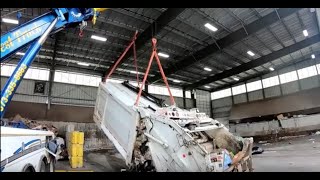
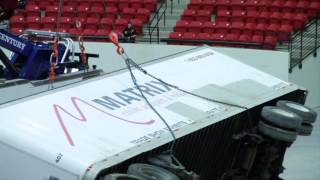
For towers loading and transporting SeaCan shipping containers, the industry has experienced several notable incidents where operators were injured or killed. For towers conducting this specialty transport niche, extreme caution and the application of best practices are key to remaining incident-free.
Based on incidents investigated by OSHA, NIOSH, and the CDC, let this narrative serve as a solid safety reminder that taking shortcuts, initiating Hollywood moves, and the misapplication of proper equipment can lead to injury or deadly results.
Although transporting shipping containers is a regular practice for tow companies and transport handlers, a routine load can go wrong when best practices aren’t followed. Three industry-related container incidents demonstrate the importance of proper safety and rigging.
Incident 1: On January 17, 2006, a tow operator at a Navy pier was working to relocate a large metal roll-off (vacuum) container weighing approximately 10,100 pounds empty. To relocate these containers in the traditional manner, they were pulled onto a flatbed carrier using 5/8-inch-diameter plow steel wire rope outfitted on the truck’s winch.
Per OSHA’s investigation, obstructions on the pier prevented the tow operator from positioning the carrier’s deck in alignment with the container for a straight pull onto the flatbed.
To load the container, the operator was alleged to have used a combination of equipment in an attempt to complete a tie-down to the container. The tie-down assembly consisted of a J-hook (rated at 5,400 pounds), a chain with a safe working load limit of 2,650 pounds, and a grab hook with a working load limit of five tons. The assembly was reportedly hooked to one side of the carrier’s deck.
With the container still on the ground, the winch wire rope was routed through the tie-down assembly and then hooked to the roll-off vacuum container. The operator threaded the wire rope through the assembly, allowing the winch to pull the container at an angle. However, he chose not to include a snatch block in the rigging.
The operator reportedly repositioned himself from the tie-down location to the opposite side of the flatbed where the truck’s controls were located. As he began winching the container, the chain section of the assembly overloaded. When it failed, the J-hook broke away and was hurled toward the operator, striking him in the head. Notably, the operator was not wearing hard-hat protection. He was transported to an area hospital, where he died from his injuries more than a week later.
Incident 2: In March 2006, a Massachusetts tow operator was loading an 18-foot metal container when the bridle chain used to pull the container broke. The chain recoiled toward the operator, striking him in the leg. He was transported to an area hospital, where he died two weeks later from blood-clot complications resulting from his injuries.
Incident 3: A western tow owner-operator responded to move a SeaCan container said to be half full. In an effort to sidestep using proper equipment, the operator reportedly attached a 5,400-pound-rated J-hook into the container’s corner eye to winch the container onto the carrier.
During the winching process, the weight of the container caused the J-hook to tip-load and partially straighten. As the J-hook straightened, it spit out from its location, causing the container to detach and fall. Standing too close to the container, the operator suffered crushing injuries when the detached container landed on his foot.
Think Safety First
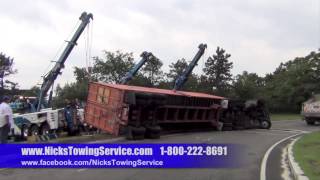
Across the U.S. and abroad, semi-trucks transporting and delivering sea containers crash all the time. Tow companies serving their state’s highway patrol often respond to these incidents. Although not overly complicated, recoveries frequently require containers to be separated from the cab and chassis. Most require lifting procedures performed by talented operators experienced in handling these types of crashes.
Especially for heavy-duty, rotator, and salvage operators, safety first is always the reigning factor in a safe and successful recovery. Towers are reminded to employ equipment specifically rated for these types of recoveries.
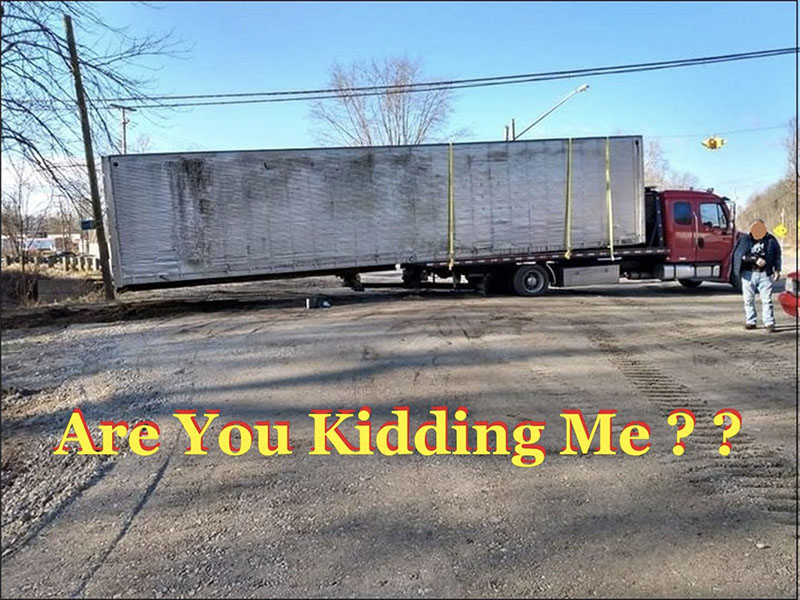
For tow companies attempting to load and transport containers without topic-specific training, you’re gambling with a potentially deadly disconnect or fall. Sure, it’s tempting to load a 40-foot container onto a 21-foot carrier deck, but sidestepping industry best practices for a paying job isn’t smart.
Don’t risk becoming a victim of a drop-or-detach industrial incident, an overload crash while driving, or a costly fine levied by OSHA or a police citation. It’s best to know when to say “NO” and pass the container job to an experienced and qualified tow company.
Operations Editor Randall C. Resch is a retired California police officer, former tow business owner, and industry advocate. As a consultant and trainer, he authored and teaches tow truck operator safety courses approved by the California Highway Patrol. For 57 years, he has been involved in the towing and recovery industry. Over 29 years, he has contributed more than 800 safety-focused articles for American Towman Magazine, TowIndustryWeek.com, and POLICE Magazine. He is a frequent seminar presenter and beauty pageant judge at tow shows. In 2014, he was inducted into the International Towing and Recovery Industry Hall of Fame, was the third recipient of the industry’s Dave Jones Leadership Award, and is a member of American Towman’s Safety Committee.
Email Randy at rreschran@gmail.com.