Digital Edition
Manuel M.
De Andrade

Nov 21, 2025

Another Towman
Struck Down
The Week's Features
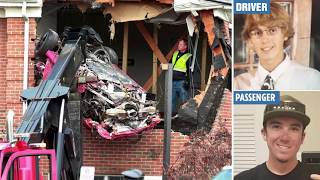
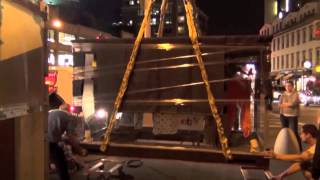
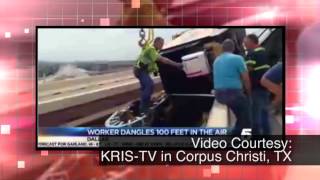
Tow truck rescued after dangling off Texas bridge in dramatic recovery.
Billboards may distract drivers—posing hidden dangers on our highways.
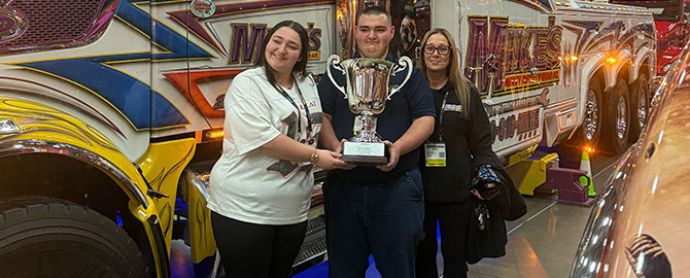
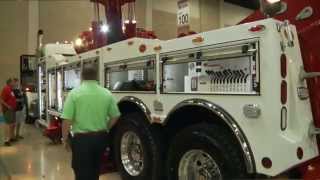
Award-winning NYC rotator blends hand-painted graphics with bold design.
San Diego repo calls surge as auto loan delinquencies hit a 15-year high.
Events
San Antonio, TX.
July 16-18, 2026
Baltimore, MD.
Nov. 19-21, 2026
Las Vegas, NV.
April 21-23, 2027
Premiere of "Home of the Brave" with lyrics • Click here to play
American Towman Magazine Presents the Week in Towing May 27 - June 02, 2026

Restoring History, One Lift at a Time

By George L. Nitti

For most towing companies, a 2,000- to 3,000-pound load is nothing unusual. But for  Jeswald’s Towinga recent job in North Jackson, Ohio, carried something far heavier than stone — it carried history.

Chris Jeswald and his father recently assisted with the restoration of a historic 19th-century cemetery entrance near a reservoir outside North Jackson. The project involved carefully lifting and positioning two massive stone pillars that would serve as the gateway to the cemetery, where graves reportedly date back to the mid-1800s.

The restoration effort was spearheaded by local volunteers connected to the North Jackson Historical Society, along with a fabrication company that works closely with Jeswald’s. Chris explained that the stone pillars had been sourced from an Amish stone craftsman and needed to be transported and delicately set into place.

“We like the oddball jobs,” said Chris Jeswald. “Especially stuff like that because it’s a little bit different. You get to do different things.”

For the lift, the company deployed one of its heavy-duty rotators — a 60-ton Jerr-Dan mounted on a Kenworth T880 chassis from the Jeswald’s fleet. The truck backed carefully into the narrow entrance area, where the aging driveway and tight roadside conditions created additional challenges.

Because the cemetery entrance sat along a winding roadway known for fast-moving traffic, Jeswald positioned a smaller company truck farther up the hill with emergency lights activated to protect the work zone while the rotator operated partially in the roadway.

The pillars themselves presented another challenge. Their uneven, textured stone surfaces meant the crew had to carefully choke the load using heavy-duty fabric straps sourced through DNA rigging products. Chris said the natural contours of the pillars actually helped provide grip during the lift.

“We just slowly tilted it up,” he explained. “We kept it low and moved it very slowly. It didn’t budge, didn’t slip at all.”

Once suspended, the pillars were carefully lowered onto rods extending from newly poured bases while workers applied mortar and aligned the historic entrance pieces into position.

The project may not have been a large commercial recovery, but for Jeswald’s, it represented something equally important: community involvement and preserving local heritage.

“It’s not always about making money,” Chris said. “I just like helping people out the best I can.”

That philosophy, he noted, was something passed down through the Jeswald family. Chris credited both his father and his late uncle, Chuck Jeswald, with building a culture centered around helping others.

“He would give the shirt off his back for just about anybody,” Chris said of his uncle.

Known for its distinctive teal-colored fleet graphics, Jeswald’s has built a reputation not only for heavy-duty towing and recovery, but also for taking on unusual assignments that require precision equipment and creative problem-solving.

And in this case, that capability helped ensure a piece of Ohio history remains standing for future generations.


American Towman Today - June 02, 2026
Click here to read more

CFPB Changes Draw Attention from Repo Alliance

Recent changes at the Consumer Financial Protection Bureau (CFPB) are prompting discussion about the future of consumer-finance oversight and its impact on the recovery industry. 

Created in 2010 following the financial crisis, the CFPB is consolidating operations in Washington, D.C., closing regional offices and restructuring staff. Industry groups, including the Repo Alliance, are monitoring the developments closely. 

The Repo Alliance, a coalition formed by the American Recovery Association (ARA), the California Association of Licensed Repossessors (CALR), Texas Accredited Repossession Professionals (Texas ARP), and Harding Brooks Insurance, was created to advocate for the repossession and recovery industry at both the state and federal levels. 

According to the organization, reduced CFPB resources could result in greater oversight by individual states, creating a more complex regulatory environment for lenders, servicers, and recovery professionals operating across multiple jurisdictions. 

The CFPB has been active in overseeing auto-finance practices, pursuing enforcement actions involving wrongful repossessions, loan-servicing errors, inaccurate credit reporting, and consumer disclosures. 

Explaining the need for industry advocacy, the Repo Alliance states that “without OUR OWN VOICE, we would be trusting the future of the Recovery Industry to the priorities of others.” 

As federal oversight evolves, the organization says it will continue educating lawmakers about the industry’s role and monitoring legislation affecting recovery operations nationwide. 
 
Source: https://curepossession.com/when-the-watchdog-leaves-what-a-smaller-cfpb-could-mean-for-repossession


The Repo Alliance, a coalition of recovery industry organizations, is monitoring changes at the CFPB and advocating for the industrys interests as consumer-finance regulation continues to evolve.

Visibility That Pays: How Roger Towing & Trucking Turned a Service Van Into a Marketing Machine

IMG 0005 13f60
By George L. Nitti

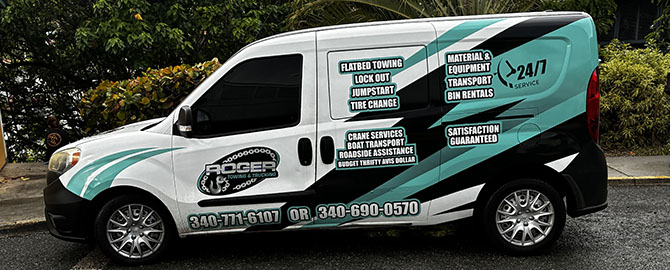
On the roads of St. Thomas, it is hard to miss the aqua-and-black service van belonging to Roger Towing & Trucking. Wrapped from bumper to bumper with bold graphics, service listings, slogans, and contact numbers, the van works as both a roadside response vehicle and a moving billboard advertising a plethora of services.

Owner Roger Francis said that visibility is intentional. “It does it like you said,” Francis explained. “That’s how you reach me out right? Because of the van.”

The customized van immediately tells motorists what the company offers: lockouts, jump starts, tire changes, roadside assistance, flatbed towing, equipment transport, and more. Francis said he wanted potential customers to understand the business at a glance. “I felt like if somebody see the van, they already know everything we do,” he said.

The aqua color scheme featured across the wrap is part of the company’s identity. “That’s all my trucks,” Francis said. “I have seven trucks and that’s my color scheme right there.”

While the graphics catch attention, the van itself serves an important operational purpose. Unlike Roger’s larger diesel tow trucks, the service van is designed for quick roadside response work throughout the island.

“I got everything in it,” Francis said. “Compressor, air tools, lockout tools — you be in and out like NASCAR changing a tire.”

The van allows him to respond quickly to lockouts and flat tires without taking a heavy tow truck across the island. “It’s easier to jump in,” he explained. “You been driving a tow truck all day and somebody call with a flat tire. Now you just jump in the van and go deal with it.”

The vehicle also supports Roger’s trucking side of the business. Francis said the van is useful for hauling smaller loads, equipment, and supplies while still being capable of towing.

“Someone stop on the side of the road and need a tow, I could pick them up at the same time,” he said. “Even if a car go over the hillside, I could use it to pull up.”

The wrap itself reportedly cost around $2,500 and was completed locally on St. Thomas.

Among the most eye-catching details are the slogans displayed across the van, including “Man Must Eat!” and “Why Fight It?” the sayings reflect a deeper philosophy about life and business. “What’s gonna be for you is gonna be for you,” he said. “Why fight it? Life is full of opportunities. Don’t fight it.”

Francis operates primarily in the eastern end of St. Thomas and works extensively with rental car companies assisting tourists with roadside problems.

“A lot of places call me for flat tires and roadside assistance,” he said. “The tourists will be faster with the van.”

Even as the towing industry becomes increasingly competitive, Francis believes branding and reputation help separate established operators from newer companies entering the market. “Unless you have a good reputation,” he said, “it’s repeat customers.”

For Roger Towing & Trucking, the service van is a mobile advertisement, a roadside rescue unit, and a reflection of the owner’s personality all rolled into one.

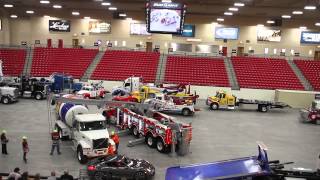
Incredible HULK SMASH! at USA Wrecker Pageant Las Vegas! An Inside look the making of Hulk 2.0

By Don Lomax
Click to enlarge


Managing Editor: George Nitti
ATTV Editor & Anchor: Emily Oz
Advertising Sales (800-732-3869):
Dennie Ortiz x213
Site Progr., Graphics & Video: Ryan Oser
Operations Editor: Randall C. Resch
Tow Business Editor: Brian J. Riker
Tow Illustrated Editor: George L. Nitti
June 03 - June 09, 2026
A judge ruled Kansas City’s new anti–predatory towing ordinance can move forward, with the regulations set to take effect Jan. 1.
  • Jacksonville Recovery Agent Killed in the Line of Duty

    The towing and recovery industry is mourning the loss of Oliver Lopez, a Jacksonville, Florida, repossession agent who was fatally shot during a vehicle recovery assignment on May 26, 2026.

    According to the Jacksonville Sheriff’s Office, the shooting occurred around 10 p.m. at the Sanctuary Walk apartment complex in Jacksonville’s Brentwood neighborhood. Investigators said Lopez had arrived to repossess a vehicle when a confrontation developed with the vehicle owner. During the altercation, a second individual allegedly arrived at the scene and opened fire, striking Lopez multiple times before fleeing.

    Family members and friends later identified the victim as Oliver Lopez. Lopez was also the owner of Oliver Towing I95 LLC, a Jacksonville-based towing company formed earlier this year.

    Friends and fellow tow operators described Lopez as a hardworking professional who understood the risks of the recovery industry and remained committed to serving his customers. His death has sent shockwaves through the repossession community and serves as a sobering reminder of the dangers recovery agents face while performing their duties.

    As of press time, no arrests had been announced and the investigation remains ongoing.

    Source: https://curepossession.com

     
  • Ontario Introduces Tougher Rules for Towing Industry

    The Ontario government has introduced new legislation aimed at tightening oversight of the province’s troubled towing industry, which has been linked to shootings, arsons, and dangerous driving incidents.

    The proposed Protecting Ontario’s Streets and Communities Act would strengthen regulations under the Towing and Storage Safety and Enforcement Act (TSSEA). Officials say the changes are designed to improve safety, increase accountability, and close enforcement gaps that currently limit police and transportation officers.

    According to the Ministry of the Solicitor General, concerns have grown over tow operators positioning themselves near crash scenes to solicit business. The legislation would establish clearer rules for conduct at collision sites and allow officers to issue roadside tickets for violations.

    The province also plans to consult on setting maximum towing and vehicle storage rates across Ontario. Officials believe standardized pricing could reduce conflicts among operators and discourage dangerous races to accident scenes.

    The legislation follows several recent incidents involving tow truck operators, including crashes, arsons, and investigations tied to alleged tow truck turf wars across the Greater Toronto Area.

    Source: https://toronto.citynews.ca

     
  • Towman Injured in Hit-and-Run Faces Long Recovery

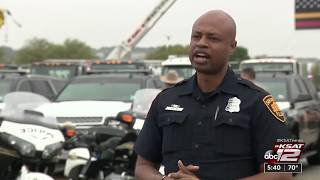
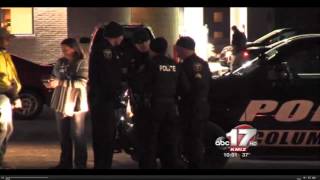
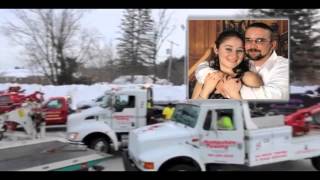
    More than three months after a devastating hit-and-run crash along Loop 410, 24-year-old tow truck driver Julian Ramirez remains in medical care as his family continues to focus on his recovery.

    Ramirez, a father of six, was critically injured while assisting stranded motorists shortly after 1 a.m. on Feb. 16 near Ray Ellison Boulevard. According to his mother, Brandy Salinas, Ramirez had finished helping two women with their disabled vehicle and told them they could head home while he completed the tow.

    Moments later, Ramirez was struck by a southbound silver sedan that fled the scene, according to San Antonio police. No arrests have been made.

    Salinas said her son suffered life-altering injuries, including a broken pelvis, fractured ribs, skull and facial fractures, and the amputation of a leg. Since the crash, Ramirez has remained in hospitals and rehabilitation facilities and has not yet returned home.

    Despite the pain and uncertainty, Salinas said she refuses to hold hatred toward the driver responsible, saying her focus remains on her son’s healing and eventual reunion with his young children.

    The family hopes an upcoming surgery will allow Ramirez to continue his recovery at home. In the meantime, they are facing mounting financial pressure from medical expenses and child care costs, which Salinas said have already surpassed $150,000.

    Source: https://www.ksat.com

     
homediv homediv
homediv
June 03 - June 09, 2026
  • Restoring History, One Lift at a Time

    By George L. Nitti

    For most towing companies, a 2,000- to 3,000-pound load is nothing unusual. But for  Jeswald’s Towinga recent job in North Jackson, Ohio, carried something far heavier than stone — it carried history.

    Chris Jeswald and his father recently assisted with the restoration of a historic 19th-century cemetery entrance near a reservoir outside North Jackson. The project involved carefully lifting and positioning two massive stone pillars that would serve as the gateway to the cemetery, where graves reportedly date back to the mid-1800s.

    The restoration effort was spearheaded by local volunteers connected to the North Jackson Historical Society, along with a fabrication company that works closely with Jeswald’s. Chris explained that the stone pillars had been sourced from an Amish stone craftsman and needed to be transported and delicately set into place.

    “We like the oddball jobs,” said Chris Jeswald. “Especially stuff like that because it’s a little bit different. You get to do different things.”

    For the lift, the company deployed one of its heavy-duty rotators — a 60-ton Jerr-Dan mounted on a Kenworth T880 chassis from the Jeswald’s fleet. The truck backed carefully into the narrow entrance area, where the aging driveway and tight roadside conditions created additional challenges.

    Because the cemetery entrance sat along a winding roadway known for fast-moving traffic, Jeswald positioned a smaller company truck farther up the hill with emergency lights activated to protect the work zone while the rotator operated partially in the roadway.

    The pillars themselves presented another challenge. Their uneven, textured stone surfaces meant the crew had to carefully choke the load using heavy-duty fabric straps sourced through DNA rigging products. Chris said the natural contours of the pillars actually helped provide grip during the lift.

    “We just slowly tilted it up,” he explained. “We kept it low and moved it very slowly. It didn’t budge, didn’t slip at all.”

    Once suspended, the pillars were carefully lowered onto rods extending from newly poured bases while workers applied mortar and aligned the historic entrance pieces into position.

    The project may not have been a large commercial recovery, but for Jeswald’s, it represented something equally important: community involvement and preserving local heritage.

    “It’s not always about making money,” Chris said. “I just like helping people out the best I can.”

    That philosophy, he noted, was something passed down through the Jeswald family. Chris credited both his father and his late uncle, Chuck Jeswald, with building a culture centered around helping others.

    “He would give the shirt off his back for just about anybody,” Chris said of his uncle.

    Known for its distinctive teal-colored fleet graphics, Jeswald’s has built a reputation not only for heavy-duty towing and recovery, but also for taking on unusual assignments that require precision equipment and creative problem-solving.

    And in this case, that capability helped ensure a piece of Ohio history remains standing for future generations.

     
  • Flipped at Dawn 

    cover 32940
    By George L. Nitti

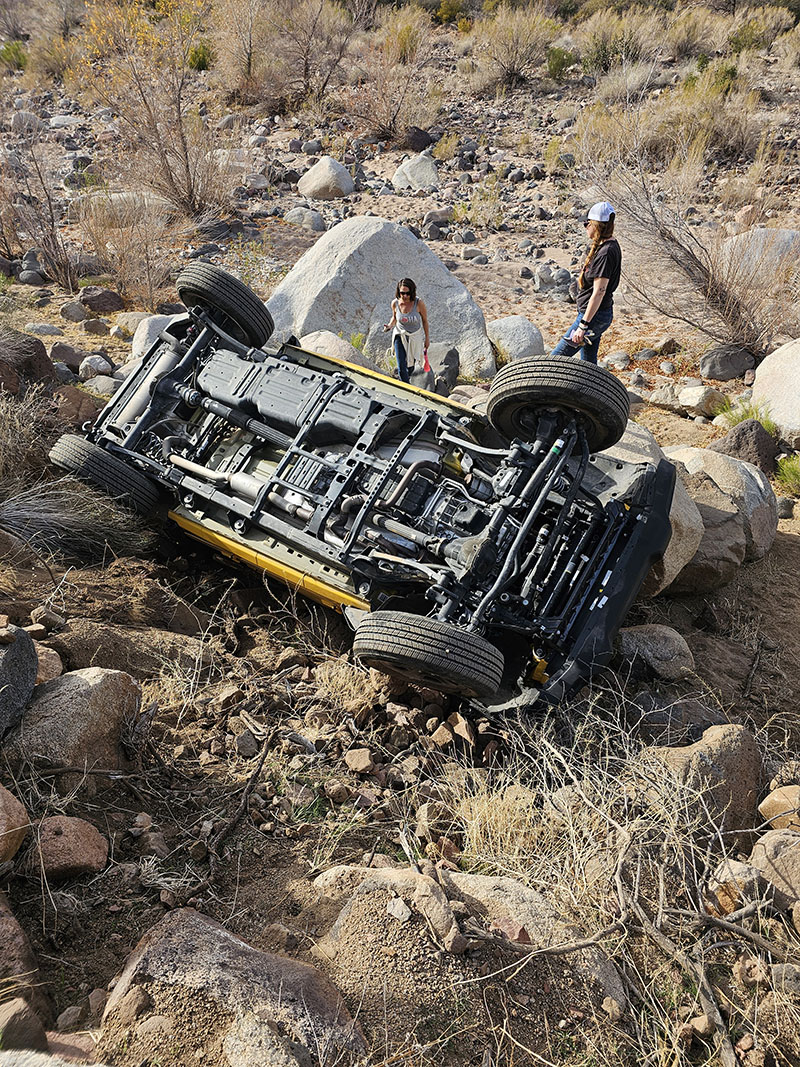
    In the early morning hours of February 23, a driver in Cleveland, North Carolina lost control, slid off the roadway, and came to rest upside down—nose-down in a ditch, well off the pavement. By the time the call went out around 8:40 a.m., the sun was up and the driver, fortunately, was uninjured and walking at the scene. 

    Responding to the scene was Cesar, also known as Towman127, of TowMan’s Roadside out of Statesville, NC. He arrived in a 2000 Ford F-550 XLT wrecker equipped with a Jerr-Dan HPL-35 twin line system.

    “The first priority was to get it back on its wheels where it sat,” Torres explained. With approximately 100 feet of cable, he was able to reach the vehicle without repositioning into the ditch. Rigging to the suspension, he carefully rotated the car from its roof onto its side, then onto all four tires, using the soft dirt surface to his advantage and thereby minimizing the risk of it rolling unpredictably on pavement and reducing the chance of additional damage. 

    Once upright, Torres repositioned his truck parallel to the vehicle’s path of travel and winched it straight back to the roadway - the same direction it had entered. The final steps were routine: load, secure, and prepare for transport. 

    Once upright, he completed the recovery by addressing a flat tire—swapping it out for the spare—before towing the vehicle to the customer’s home.

    While Cesar described the job as straightforward, it serves as a textbook example of proper technique: controlled winching, correct rigging, and using the environment to your advantage—skills that separate experienced operators from risky guesswork.

    For Torres, a 26-year industry veteran who launched his own company two years ago after relocating from New York City, each call is also an opportunity to reinforce best practices. Through his extensive YouTube training content, he’s helped thousands of operators learn safer, more efficient recovery techniques. 

    This job may not have been the most complex of his career, but it’s a textbook example of doing the basics exactly right. 

     
  • Whiteout on the Divide: Inside Colorado’s I-70 Chain-Reaction Pileup

    i 70 7 57786
    By George L. Nitti

    On the afternoon of April 14, what began as a spring drive along Interstate 70 turned into a sudden, disorienting disaster just east of the Eisenhower–Johnson Memorial Tunnel.

    At approximately 2:50 p.m., drivers exiting the tunnel on the eastbound side were met with a dramatic and dangerous shift in conditions. “On the west side, roads were just wet,” said Charlie Stubblefield, owner of Mountain Towing & Recovery. “But the moment you came out the other side—it was instant whiteout. Ice, snow… you could barely stand up.”

    The abrupt transition proved catastrophic. Vehicles traveling at highway speeds encountered a gradual curve and lost control almost immediately. Within moments, a chain reaction unfolded. “Boom, boom, boom—it just stacks up,” Stubblefield said. By the time authorities shut down the tunnel, an estimated 78 vehicles had been caught in the pileup.

    Remarkably, there were no fatalities, and reported injuries were minor, a fact Stubblefield still finds extraordinary given the damage. “Some vehicles were crushed beyond recognition,” he said, recalling a mangled pickup discovered only after another SUV was removed.

    Mountain Towing & Recovery, based about 11 miles away in Silverthorne, had crews already patrolling due to the incoming weather. Two units arrived within a minute. Soon, a coordinated response involving multiple towing companies, the Colorado State Patrol, and other agencies was underway.

    Serving as incident commander, Stubblefield oversaw the complex task of clearing the interstate. Four heavy wreckers, seven rollback trucks, and additional support vehicles worked in unison to untangle and remove wreckage. Vehicles were transported to a staging area at Loveland Ski Area, where documentation could continue off the highway.

    But clearing the road was only the beginning.

    In the days that followed, Stubblefield’s team faced an avalanche of logistical challenges such as tracking vehicles, assisting displaced drivers, and coordinating with insurance companies. “You’re repainting the picture over and over,” he said. “Explaining what happened, why it took what it took.”

    For Stubblefield, the takeaway is simple: “Give each other space. Look beyond the car in front of you. A lot of these pileups can be avoided.”

     
June 03 - June 09, 2026
  • SeaCan Containers Demand Load Safety

    IMG 0012 e5e51

    By Randall C. Resch

    For towers loading and transporting SeaCan shipping containers, the industry has experienced several notable incidents where operators were injured or killed. For towers conducting this specialty transport niche, extreme caution and the application of best practices are key to remaining incident-free.

    Based on incidents investigated by OSHA, NIOSH, and the CDC, let this narrative serve as a solid safety reminder that taking shortcuts, initiating Hollywood moves, and the misapplication of proper equipment can lead to injury or deadly results.

    Although transporting shipping containers is a regular practice for tow companies and transport handlers, a routine load can go wrong when best practices aren’t followed. Three industry-related container incidents demonstrate the importance of proper safety and rigging.

    Incident 1: On January 17, 2006, a tow operator at a Navy pier was working to relocate a large metal roll-off (vacuum) container weighing approximately 10,100 pounds empty. To relocate these containers in the traditional manner, they were pulled onto a flatbed carrier using 5/8-inch-diameter plow steel wire rope outfitted on the truck’s winch.

    Per OSHA’s investigation, obstructions on the pier prevented the tow operator from positioning the carrier’s deck in alignment with the container for a straight pull onto the flatbed.

    To load the container, the operator was alleged to have used a combination of equipment in an attempt to complete a tie-down to the container. The tie-down assembly consisted of a J-hook (rated at 5,400 pounds), a chain with a safe working load limit of 2,650 pounds, and a grab hook with a working load limit of five tons. The assembly was reportedly hooked to one side of the carrier’s deck.

    With the container still on the ground, the winch wire rope was routed through the tie-down assembly and then hooked to the roll-off vacuum container. The operator threaded the wire rope through the assembly, allowing the winch to pull the container at an angle. However, he chose not to include a snatch block in the rigging. 

    The operator reportedly repositioned himself from the tie-down location to the opposite side of the flatbed where the truck’s controls were located. As he began winching the container, the chain section of the assembly overloaded. When it failed, the J-hook broke away and was hurled toward the operator, striking him in the head. Notably, the operator was not wearing hard-hat protection. He was transported to an area hospital, where he died from his injuries more than a week later.

    Incident 2: In March 2006, a Massachusetts tow operator was loading an 18-foot metal container when the bridle chain used to pull the container broke. The chain recoiled toward the operator, striking him in the leg. He was transported to an area hospital, where he died two weeks later from blood-clot complications resulting from his injuries.

    Incident 3: A western tow owner-operator responded to move a SeaCan container said to be half full. In an effort to sidestep using proper equipment, the operator reportedly attached a 5,400-pound-rated J-hook into the container’s corner eye to winch the container onto the carrier.

    During the winching process, the weight of the container caused the J-hook to tip-load and partially straighten. As the J-hook straightened, it spit out from its location, causing the container to detach and fall. Standing too close to the container, the operator suffered crushing injuries when the detached container landed on his foot.

    Think Safety First

    Across the U.S. and abroad, semi-trucks transporting and delivering sea containers crash all the time. Tow companies serving their state’s highway patrol often respond to these incidents. Although not overly complicated, recoveries frequently require containers to be separated from the cab and chassis. Most require lifting procedures performed by talented operators experienced in handling these types of crashes.

    Especially for heavy-duty, rotator, and salvage operators, safety first is always the reigning factor in a safe and successful recovery. Towers are reminded to employ equipment specifically rated for these types of recoveries. 

    For tow companies attempting to load and transport containers without topic-specific training, you’re gambling with a potentially deadly disconnect or fall. Sure, it’s tempting to load a 40-foot container onto a 21-foot carrier deck, but sidestepping industry best practices for a paying job isn’t smart.

    Don’t risk becoming a victim of a drop-or-detach industrial incident, an overload crash while driving, or a costly fine levied by OSHA or a police citation. It’s best to know when to say “NO” and pass the container job to an experienced and qualified tow company. 

    Operations Editor Randall C. Resch is a retired California police officer, former tow business owner, and industry advocate. As a consultant and trainer, he authored and teaches tow truck operator safety courses approved by the California Highway Patrol. For 57 years, he has been involved in the towing and recovery industry. Over 29 years, he has contributed more than 800 safety-focused articles for American Towman Magazine, TowIndustryWeek.com, and POLICE Magazine. He is a frequent seminar presenter and beauty pageant judge at tow shows. In 2014, he was inducted into the International Towing and Recovery Industry Hall of Fame, was the third recipient of the industry’s Dave Jones Leadership Award, and is a member of American Towman’s Safety Committee.

    Email Randy at rreschran@gmail.com.

     
  • Saving Face: Preventing Head & Face Injuries in the Towing Industry

    savingface 8e9dc
    By Randall C. Resch

    On a quiet morning, one of my drivers walked into the office clutching a bloody rag against his mouth. His upper lip was split, several teeth were loose, and despite the pain, he managed a defeated smile and said, “Boss, the jack handle got me.”

    It sure did.

    For tow company owners focused on risk management, incidents like these deserve attention at every safety meeting. When an operator gets injured, management should immediately review what the employee was doing, whether proper procedures were followed, and if adequate training had been provided.

    A Day’s Work

    Tow operators don’t need formal tow school to understand that head and face injuries are painful, costly, and often preventable. When these accidents happen, companies must honestly ask whether the operator was working safely and whether management provided proper OSHA-required training.

    Today, lack of training can lead to fines, liability, and possible legal exposure. In an industry filled with hazards, topic-specific safety training is no longer optional.

    Over the years, I’ve witnessed numerous injuries and fatalities in towing and recovery. Reviewing those incidents reveals valuable lessons that can help prevent repeat accidents.

    For operators fortunate enough to avoid a serious head or face injury so far, the following examples highlight some of the most common dangers encountered during a normal shift.

    Jack Handle Assemblies

    The opening scenario involved a two-piece jack handle disconnecting and striking the operator in the mouth. Two-piece handles require operators to ensure locking knobs or spring buttons are fully engaged before moving or pulling the jack.

    A quick inspection can prevent serious injury.

    Dolly Lift Bars & Wrecking Bars

    Dolly bars and wrecking bars must be used only for their intended purposes.

    A loose dolly bar can cause severe facial injuries or head trauma if installation procedures and safety latches are ignored. Operators should always remain outside the natural arc of the lifting bar in case a latch fails or the bar slips free.

    If a dolly bar escapes an operator’s grip, step away immediately to avoid being struck.

    Wrecking bars, with their sharp edges and pointed ends, are designed for prying damaged vehicle components—not for lifting dollies.

    Remove Snatch Blocks After Use

    An experienced tower nearly lost an eye and suffered a broken jaw when a chain snatch block snagged the carrier deck during loading.

    Leaving snatch blocks hanging on winch lines creates unnecessary hazards. Banjo eyes, bed components, or chains can snag unexpectedly, causing violent recoil and serious injuries to the face, chest, or arms.

    Once the recovery is complete, remove and properly stow snatch blocks.

    Prevent Falls from Carrier Decks

    Falls from carrier decks can be deadly. In one tragic case, a 47-year-old operator died after slipping from a carrier deck.

    With deck heights commonly ranging from 42 to 48 inches, even a short fall can produce catastrophic injuries. Operators should move carefully, maintain good footing, and keep decks free of tools, debris, and spilled fluids.

    Good housekeeping is a critical part of safety.

    Falls from Truck Cabs

    A tow trainee riding as an assistant reportedly lost footing while exiting a truck cab and suffered fatal injuries from the fall.

    Three points of contact should always be maintained when entering or exiting truck cabs. Operators should never jump from the cab and should first confirm traffic conditions before stepping into roadway areas.

    Hands should remain free while climbing in or out of the truck.

    Running During Recoveries

    Many operators pride themselves on working quickly, but running at recovery scenes creates unnecessary risk.

    Uneven pavement, broken glass, debris, loose equipment, and hidden obstacles can all lead to serious trip-and-fall injuries. Recovery scenes are hazardous enough without adding speed to the equation.

    As the saying goes: “When speed goes up, safety goes down.”

    Saving Face

    No hard fall is enjoyable. If a fall becomes unavoidable, operators should protect the head and face by tucking the chin, rounding the back, and rolling through the fall whenever possible.

    Attempting to break a fall with outstretched arms often results in broken wrists or arms instead.

    For operators who have never suffered an on-the-job injury, consider yourself fortunate. In the towing and recovery industry, injuries are not a matter of if—but when.

    This industry can hurt you. Stay alert, stay trained, and work safely.

    Operations Editor Randall C. Resch is a retired, veteran, California police officer, former tow business owner and industry advocate. As consultant and trainer, he authored and teaches tow truck operator safety courses approved by the California Highway Patrol. For 57-years, he has been involved in the towing and recovery industry. In 29-years, he has contributed more than 800-safety focused articles for American Towman Magazine, TowIndustryWeek.com and POLICE Magazine. He is a frequent seminar presenter and beauty pageant judge at tow shows. In 2014, he was inducted to the International Towing and Recovery Industry Hall of Fame, was the 3rd recipient of the industry's "Dave Jones Leadership Award," and is a member of American Towman’s Safety Committee.

    Email Randy at rreschran@gmail.com.


  • Handling High-Profile Evidence Tows

    high profile tow 55ab2
    By Randall C. Resch

    Of the year’s biggest criminal investigations, one was the high-profile kidnapping of Nancy Guthrie, who disappeared from her Tucson, Arizona home. As part of the FBI’s ongoing investigation, a Range Rover was impounded as a means to potentially discover trace DNA transferred by suspects. In California, a high-profile homicide investigated the death of a Los Angeles teen whose body was discovered in a Tesla owned by a well-known rap artist.

    Because few tow companies are official “evidence contractors,” there’s no formal training towers receive on this specific niche. Let this narrative serve as simple reminders expected of operators called to evidence scenarios.

    Important: Vehicles with potential evidence require “special care and handling.” Personnel must fully understand “special handling” when chain of custody demands total care and control.

    High-Profile Cases & Media Attention

    As what happened in the Nicole Brown Simpson case (June 1994), never remove (steal) items from evidence vehicles. Avoid urges to take “souvenirs” or face being arrested and charged with felony tampering, destruction of evidence, and possession of stolen property. If weapons, ammunition, or contraband is observed, notify the impounding agency.

    For high-profile cases, a hoard of media will be at the tow location. Towers themselves will likely be filmed as the vehicle is being loaded. Work steadily, professionally and, most importantly, never make statements as they could be mistaken or misconstrued.

    During kidnap, sex-crime, and human trafficking investigations, multiple jurisdictions conduct hundreds, if not thousands, of investigative hours. These cases are extremely complicated. In border towns with proximity to international borders, vehicles determined to be “potential evidence” demand specific handling, care, transport, and storage. When improper handling occurs, entire cases can be thrown out and suspects go free.

    Burned Vehicles & Body Relocation

    Arson fires intentionally hide evidence of crimes. Before loading burned vehicles, peek into burned spaces knowing burned corpses are difficult to recognize.

    If a body is inside and you’re asked to relocate the vehicle with the body still inside, this “special request” requires a “yes” response. Our intent is to serve at the highest level possible. If tow management prohibits recovering upside-down vehicles, or moving vehicles in this manner, the company shouldn’t serve as an evidence contractor.

    Agency authorizations should allow recovering vehicles upside down or moving vehicles in this manner. Evidence towers do many things beyond the norm at the IC’s request with no hesitation.

    Relocation may be necessary due to:

    • Officer safety from an unruly crowd
    • To protect the dignity of the deceased

    Tow personnel aren’t authorized to cover or tarp a deceased person in an attempt to shield citizens from viewing a corpse. Covering the body may alter or contaminate valuable evidence. If a body is covered by police investigators or CSI techs, it becomes part of their crime scene.

    Common Evidence Scenarios

    Towers should know the nature of the investigation first so they can best hook up or transport the evidence vehicle without touching surface locations containing evidence.

    When pedestrians are struck and the victim’s body goes under the suspect vehicle, it leaves bits of clothing, fibers, hair follicles, skin and bone fragments, blood, and other trace evidence. Fabric abrasions, marks, or torn material caught underneath are critical pieces of evidence.

    When pedestrians are struck and the victim’s body goes over the suspect vehicle, evidence is likely left on the bumper, grill, hood, windshield, or windshield frame. Trace evidence includes fibers, skin and bone fragments, blood, and paint chips. Fabric abrasions or torn materials are commonly found on the vehicle’s surfaces.

    Where pedestrians are struck and witnesses describe the suspect vehicle driving “lights-out,” don’t turn on the suspect vehicle’s headlights. Investigators may need to determine whether headlights or taillights were illuminated at the time of impact.

    Fingerprint Evidence & Professional Responsibility

    Latent prints discovered during investigations are crucial pieces of evidence linking suspects to crimes. Print experts determine whether latent prints are “fresh” or “old.” Mishandled load and tow activities could destroy fingerprint evidence. Wear gloves, but don’t touch vehicle surfaces when possible. If surfaces are unintentionally touched, evidence can be destroyed.

    At the onset of tow or transport requests, determine if suspect vehicles have a “Hold for Prints” and whether the vehicle will be stored indoors. Don’t roll windows up or down, which may smear latent prints. Don’t sit in the vehicle.

    Never allow anyone access to vehicles without authorization. Refer inquiring parties to the investigating agency. Don’t be afraid to deny access to family members, attorneys, or news media until evidence holds are completely released.

    This narrative touches only the tip of what towers should know regarding what it takes to be an evidence provider. When handling evidence tows, providers will be held to higher standards.

    Listen carefully to instructions provided at the time of tow or transport. Your professionalism is required because, at some point, towers may be subpoenaed to testify regarding what actions were taken.

    Operations Editor Randall C. Resch is a retired, veteran, California police officer, former tow business owner and industry advocate. As consultant and trainer, he authored and teaches tow truck operator safety courses approved by the California Highway Patrol. For 57-years, he has been involved in the towing and recovery industry. In 29-years, he has contributed more than 800-safety focused articles for American Towman Magazine, TowIndustryWeek.com and POLICE Magazine. He is a frequent seminar presenter and beauty pageant judge at tow shows. In 2014, he was inducted to the International Towing and Recovery Industry Hall of Fame, was the 3rd recipient of the industry's "Dave Jones Leadership Award," and is a member of American Towman’s Safety Committee.

    Email Randy at rreschran@gmail.com.

     
homediv
homediv

June 03 - June 09, 2026
  • Visibility That Pays: How Roger Towing & Trucking Turned a Service Van Into a Marketing Machine

    IMG 0005 13f60
    By George L. Nitti

    On the roads of St. Thomas, it is hard to miss the aqua-and-black service van belonging to Roger Towing & Trucking. Wrapped from bumper to bumper with bold graphics, service listings, slogans, and contact numbers, the van works as both a roadside response vehicle and a moving billboard advertising a plethora of services.

    Owner Roger Francis said that visibility is intentional. “It does it like you said,” Francis explained. “That’s how you reach me out right? Because of the van.”

    The customized van immediately tells motorists what the company offers: lockouts, jump starts, tire changes, roadside assistance, flatbed towing, equipment transport, and more. Francis said he wanted potential customers to understand the business at a glance. “I felt like if somebody see the van, they already know everything we do,” he said.

    The aqua color scheme featured across the wrap is part of the company’s identity. “That’s all my trucks,” Francis said. “I have seven trucks and that’s my color scheme right there.”

    While the graphics catch attention, the van itself serves an important operational purpose. Unlike Roger’s larger diesel tow trucks, the service van is designed for quick roadside response work throughout the island.

    “I got everything in it,” Francis said. “Compressor, air tools, lockout tools — you be in and out like NASCAR changing a tire.”

    The van allows him to respond quickly to lockouts and flat tires without taking a heavy tow truck across the island. “It’s easier to jump in,” he explained. “You been driving a tow truck all day and somebody call with a flat tire. Now you just jump in the van and go deal with it.”

    The vehicle also supports Roger’s trucking side of the business. Francis said the van is useful for hauling smaller loads, equipment, and supplies while still being capable of towing.

    “Someone stop on the side of the road and need a tow, I could pick them up at the same time,” he said. “Even if a car go over the hillside, I could use it to pull up.”

    The wrap itself reportedly cost around $2,500 and was completed locally on St. Thomas.

    Among the most eye-catching details are the slogans displayed across the van, including “Man Must Eat!” and “Why Fight It?” the sayings reflect a deeper philosophy about life and business. “What’s gonna be for you is gonna be for you,” he said. “Why fight it? Life is full of opportunities. Don’t fight it.”

    Francis operates primarily in the eastern end of St. Thomas and works extensively with rental car companies assisting tourists with roadside problems.

    “A lot of places call me for flat tires and roadside assistance,” he said. “The tourists will be faster with the van.”

    Even as the towing industry becomes increasingly competitive, Francis believes branding and reputation help separate established operators from newer companies entering the market. “Unless you have a good reputation,” he said, “it’s repeat customers.”

    For Roger Towing & Trucking, the service van is a mobile advertisement, a roadside rescue unit, and a reflection of the owner’s personality all rolled into one.

     
  • Rolling in Teal

    storycover 4b1bf
    By George L. Nitti

    For Chris Jeswald, the company’s unmistakable teal branding evolved naturally from Jeswald Auto-Truck Service’s earliest days.

    “Our colors actually came from an older truck we had — one of our first trucks way back in the day,” Chris explained. “It was a tealish Swiss color, kind of like what it is now.”

    Over time, the shade evolved into the modern teal-green tone now associated with Jeswald Auto-Truck Service, based out of Austintown, Ohio.

    “It popped, and no one else really used that color, so that’s kind of why we rolled with that one,” he said.

    The company’s lettering also carries a small detail that has become part of its identity over generations.

    “In the E there’s like a little candle,” Chris said. “I have no idea where that came from, but I think a long time ago, when they would letter up the doors, one of the guys did it like that and it just kind of stuck.”

    Today, that subtle design element remains part of every Jeswald logo.

    The company’s crest logo also reflects Jeswald’s close relationship with first responders.

    “Our graphics guy wanted to replicate firefighters’ crests,” Chris explained. “That’s how they kind of came up with that one — and I loved it.”

    Chris’s personal workhorse — a 2021 Ford F-550 equipped with a Jerr-Dan MPL-40 — showcases Jeswald’s signature graphics in action.

    “That one’s my truck actually,” he said. “I use that for everything.”

    The unit was heavily customized after the company began covering the Ohio Turnpike, where deer strikes became common.

    “We were getting numerous deer accidents… multiple a night,” Chris recalled. “I told my dad, ‘Hey, I’m kind of nervous. I don’t want to end up catching a deer,’ so we ended up putting that front bumper on it.”

    The truck now serves as a recovery unit, service vehicle, transport rig, and even an off-road recovery truck equipped with a front winch.

    “I do all kinds of jobs with it — anything and everything,” Chris said. “It’s a pretty stout truck.”

    Even the lighting package was selected with functionality in mind.

    “My favorite light actually has a little puddle light,” he said. “At nighttime, you can actually see where you’re backing up and where your rear wheels are at.”


  • Red and White to the Rescue

    coverarticle a5037
    By George L. Nitti

    In the small, rural community of Dowagiac—a town of just a few thousand people with only three traffic lights—presence and reputation matter. For True’s Towing, those values are carried not only through service, but through an unmistakable visual identity featuring bold red, white, gray, and black graphics.

    For Travis True, the company’s fourth-generation owner, the evolution of the fleet’s graphics was never about flash. It was about recognition, trust, and legacy.

    “I didn’t want to be the biggest,” True says. “I just wanted to be the best.”

    Over time, the company’s branding evolved from hand-painted lettering on white trucks with red fenders—dating back to his great-grandfather—to today’s high-impact vinyl wraps that are impossible to miss.

    “When our trucks are coming down the road, I want people to know it’s us, especially when they’re stranded and waiting for help,” True explains. “That recognition means something.”

    The Rotator as a Timeline

    Their 2024 Peterbilt 389 paired with a 50-ton Jordan 5060 rotator serves as a rolling example of how the company’s brand has evolved over generations.

    At the front of the truck, the styling reflects a classic, old-school aesthetic. A heavy-duty grille guard and clean body lines evoke the rugged work trucks of the 1950s and ’60s, paying tribute to the company’s roots.

    Along the hood, elegant cursive script reading “Over 70 Years of Dedicated Service” echoes the hand-painted lettering that once appeared on the company’s early trucks—simple, proud, and personal.

    But as the eye moves farther down the truck, the design transforms.

    The graphics intensify with layered stripes, aggressive angles, splashes of color, and sweeping motion that create a sense of speed and energy. Toward the rear, the design becomes almost explosive, as if the truck had driven through a burst of paint.

    “It’s a timeline,” says True. “You start with the old-school look, and as you move back, it builds into what we are today.”

    More Than a Tow Truck

    What began decades ago as a single operator with a truck has grown into a highly trained emergency response operation serving multiple counties throughout the region.

    Today, True’s Towing assists fire departments and municipalities with specialized services that include hazardous materials response, water recovery and certified dive operations, and heavy rescue support.

    That mission is reflected directly in the branding.

    The words “Emergency Response Team” are prominently displayed on the trucks, reinforcing what local agencies already know: when situations escalate beyond standard capabilities, True’s Towing is often the call that comes next.

    The company’s visual identity also serves another important purpose—visibility. True wants stranded motorists and emergency personnel alike to immediately recognize the trucks when they arrive on scene.

    “We see people post pictures of our trucks online all the time,” True says. “They’ll say, ‘Red and white to the rescue.’”

    A Name Worth Living Up To

    The company name itself carries weight, and Travis True understands the responsibility that comes with it.

    “It’s a big name to live up to,” he says. “Everything we do has to reflect that.”

    What makes the company’s rotators and recovery units stand out isn’t just polished chrome or eye-catching graphics. It’s the meaning behind them.

    Every stripe, every word, and every color choice reflects a larger story—one built on family, service, professionalism, and commitment to excellence.

    In a town like Dowagiac, where reputation lasts generations, that story matters.

    And when one of those red-and-white trucks appears on the horizon, lights flashing in the distance, people don’t just see a tow truck.

    They see help on the way.

     
homediv
June 03 - June 09, 2026
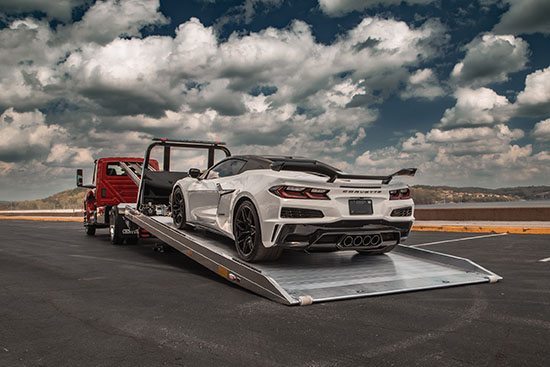
  • VLA Carrier: Low-Angle Loading for Low-Clearance Vehicles

    millervlacarrier 5263d

    The new VLA (Very Low Angle) carrier from Miller Industries is engineered for the safe, efficient loading and transport of low-clearance vehicles and equipment. Designed for smooth operation and everyday versatility, the VLA combines a low 6-degree loading angle with a durable rack-and-pinion bed system for controlled loading performance.

    Product Features

    • 23-foot carrier deck
    • True 6-degree load angle
    • Twin-motor rack-and-pinion bed travel system
    • Available in aluminum or steel configurations
    • 10,000-lb. platform capacity
    • 12,000-lb. winch included
    • Wheel lift rated at 3,000 lbs.
    • 7,500-lb. tow rating at full extension
    • Designed for low-clearance vehicles and jobsite equipment
    • Available under the Century, Vulcan, and Chevron product lines
     
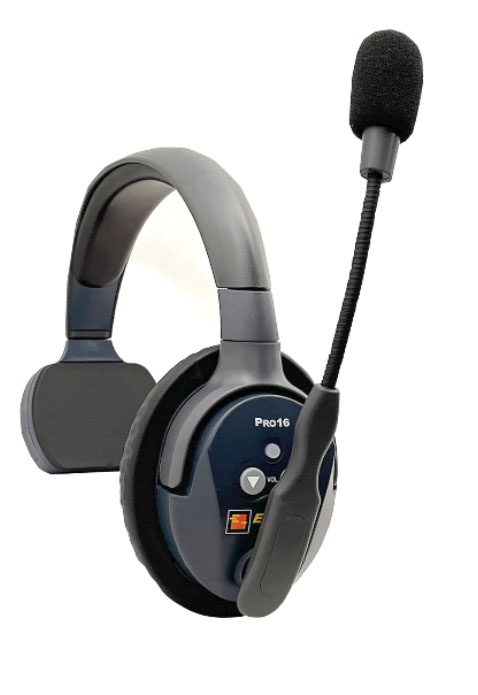
  • EARTEC PRO16 Communication System

    eartechpro 4a658
    The EARTEC PRO16 headset system provides seamless, full-duplex team communication for demanding work environments. Designed for crew coordination and safety, the PRO16 delivers clear, real-time communication without the need for a base station.

    Key Features:

    -- Supports up to 16 users in full-duplex communication
    -- Hands-free, self-contained headsets – no base station required
    -- Real-time communication with no delays or digital lag
    -- Specialty RF microprocessor eliminates voice echo
    -- Crystal-clear audio for reliable communication in demanding environments
    -- Auto-mute boom microphone mutes when placed in the up position
    -- Private communication network for secure team conversations
    -- Improves crew coordination, efficiency, and safety
    -- Designed for hard-working industrial crews

    For more information, https://eartec.com/ultralite-pro-16-headsets/

     
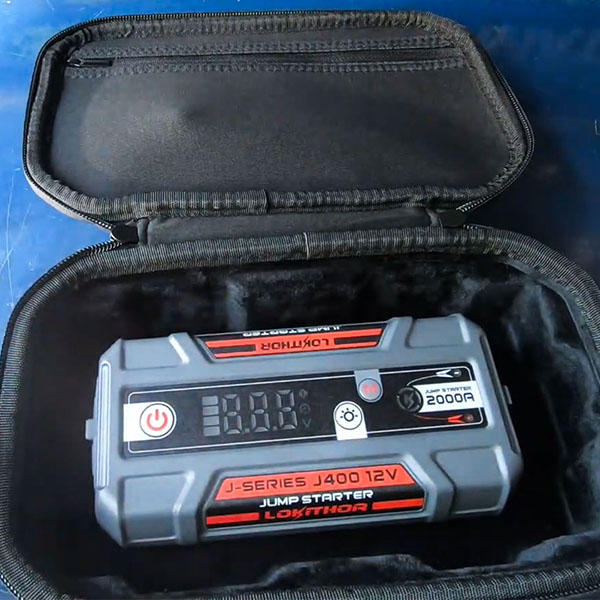
  • Lokithor J400 Car Jump Starter

    lokithorjumpstarter 40381
    LOKITHOR J400 Car Jump Starter – 2000A 12V Lithium Battery Booster

    Key Features:

    -- Powerful Engine Starting: Delivers 2000A peak current, capable of jump-starting 8.0L gasoline or 6.0L diesel engines. Provides up to 25 jump-starts on a single charge.

    -- Advanced Safety Protection: Integrated Battery Management System (BMS) and smart clamps offer 10 safety protections for secure 12V vehicle connections.

    -- Intelligent Digital Operation: CONNECTMAX technology optimizes starting efficiency. The 5.75-inch smart color display shows battery status and operational info.

    -- High-Rate Lithium Battery: Ultra-high-rate (>80C) lithium battery delivers 2.5× the discharge current of standard jump starters in a lightweight 1.5-pound design.

    -- Versatile Portable Power: 3-in-1 functionality for jump-starting, powering devices, and emergency lighting.

     
homediv
homediv
homediv
June 03 - June 09, 2026
Show More
homediv homediv
June 03 - June 09, 2026
Alex Alvarez of Active Recovery Services repossesses a vehicle as auto loan delinquencies continue to rise across the county.
  • Get Ready for Repos - Training and Tools for Tow Firms

    While a recovery agent may work as a tow truck operator, a tow truck operator can only act as a recovery agent if they possess knowledge of consumer protection laws.
    The only way to acquire this knowledge is through proper credentialing and certification.

    10,000,000 CARS WILL BE ASSIGNED TO BE REPOSSESSED IN 2026…and only 2.6 million will actually be picked up, which is a deficit of 7.4 million assignments not recovered. Lienholders & lenders will send many assignments to untrained or non-qualified tow truck operators because there are not enough trained and certified repossessors to handle the increased workload. This risky policy of partnering with non-credentialed bad actors will result in drivers and consumers being killed or injured. Training, credentialing, and certification programs are available; it is an easy decision to train your employees. Seems like a simple solution to an often deadly situation. Knowledge keeps your company out of the courtroom and your employees safe.

    Given that law firms across North America and the United States Department of Justice have compensated me for my professional evaluations and opinions, there is a darn good chance I might just know what I am talking about, so keep reading, I know more than you about the
    repo business. Its ok to be arrogant, as long as I am right.

    Even if you accept just one repossession assignment this year, the words you're about to read might save your life, the life of a family member, an employee, or a consumer, and by the way, we are all consumers.

    My review of the many litigation documents, body, and truck cam videos as well as witness statements and police reports, has helped me inform you of a verifiable truth. During the repossession process, tow truck operators make really bad decisions because they have not
    been adequately trained to perform a repossession. Tow bosses fail to train their drivers of consumers’ rights, and the procedures involved in the self-help repossession process. These bad decisions have caused tow operators to become injured or to injure someone, or the
    bad decisions have caused someone to be killed during the repossession process. If you have untrained drivers repossessing cars, its just a matter of time before you step into a bucket of it.

    My objective is to teach you, train you and tell you the difference between what is legal and illegal during the repossession process, and also the differences between what is right and what is wrong. Sometimes what the written law in your State says is right might just be the
    wrong thing to do.

    First, are you aware that when the consumer objects to the repossession, you must stop all repossession efforts, drop the car and retreat. Yes, this means stop the repossession immediately…stop means stop. You know what I am talking about…no means no! Get it?

    Did you know also that the leading cause of repossession lawsuits are the lienholder never had the authorization to repossess the car in the first place? That’s right, the lender, or title loan company did not have clear title to the car they have authorized you to repossess, and if you aided in the improper taking of the car, you will be brought into the lawsuit. Let me say it again…YOU WILL be brought into the lawsuit. I know this because its true.

    Are you aware that professional repossession company’s verify the lien on the car before attempting the repossession? Its as easy as 123, that’s ADD123. The uncomplicated process of verifying the lien can save you a boatload of Benjamins and the frustrations of a wrongful repossession lawsuit.

    Do you understand the terms “custody and control” or the answer to the question “When is a repossession complete?” The answer to these two are complicated and disagreed upon. You must know the situations which will help define the answers. Your driver/repossessor must know what decision to make during a confrontational situation. It really is not as complicated as some would make it out to be if you can remember “NO MEANS NO.”

    I am not trying to scare you away from a great revenue producing opportunity, unless you don’t plan to provide training and knowledge to your employees, then yes, stay the heck out of the repossession business…we do not want any more “bad actors” up in our business, and the American consumers don’t need you either.

    Providing repossession services to the Nations automobile lenders can be very profitable. The business of repossessing collateral has additional revenue streams such as providing keys, sales or reconditioning, detailing services, or remarketing opportunities. It is a fact that some repossession companies bring in more revenue on providing keys than what the repossessions fees bring in…replaced your car fob lately? Consider repossessing other collateral besides cars, assets such as commercial trucks, heavy equipment, or recreational vehicles? For over 20 years, my repossession business was focused on commercial truck and equipment repossessions. Although I also repossessed cars, I preferred the commercial side of the repossession business. Repossessing trucks and equipment opened up my sales and remarketing division of
    my repossession firm. Many of my clients would request that I remarket the collateral directly from my facility. I made a ton of money repossessing commercial trucks and equipment.
    Are you aware, in most States, a dealer’s license to sell a car or truck is not required if you are acting as a representative of the lienholder. Would you believe me If I told you there are over 500 subprime truck and equipment lenders across the country, all looking for a repossession company to repossess their delinquent trucks? Repossessors who possessed knowledge of trucks and equipment and not just Toyota’s and Kia’s. The challenges keeping you away from providing repossessions to your list of services can all be overcome through knowledge. Knowledge comes from certification, credentialing, and training.

    A tow company opening up a repossession department is not brain surgery and there are straightforward steps to follow to get you started. Training and safety protocols is the most important. With the training, credentialing, and certification available, there is no reason your towing company can’t bring in a high percentage of the 10M repossession assignments expected to be dolled out every year for the next few years and expected to increase in the years to follow. Here are some topics to consider.

    • Training & Repossession Credentialing & Certification
    • Licensing
    • License Plate Recognition (LPR)
    • Tow trucks with wheel lift capabilities.
    • Repossession Software
    • Obtaining Clients
    • Direct and indirect repossession assignments
    • Repossession Associations

    It has been said that the repossession industry maintains a particularly close association with the towing industry, more so than any other sector. I can agree with that statement but understand that in some circumstances, a repossessor can be a tow truck operator, but a tow truck operator cannot be a repossessor. In this article, I will explain this in much more detail. To be successful in the repossession business, there are standards and qualifiers that will guide your towing company to success. A little about me. I have been retained by law firms throughout the country over fifty times. My job is to offer my opinion to the courts on repossession and towing industry professional standards. I have also been retained by the United States Department of Justice as a repossession industry expert.

    Lawyers seek my opinions on documents, witness statements, body-cam footage, and any details related to licensing, training, certification, and credentials for both plaintiffs and defendants who become involved in lawsuits. Once I thoroughly review all materials, I draft a detailed report with my findings, which is then used by judges during arbitration, mediation, or court proceedings. My report is presented to the jury prior to private deliberations. Thanks to my experience, I have been accepted as one of the Nation’s most sought after wrongful repossession experts.

    Let’s start with some facts.

    There are two types of repossessions. The Self-help repossession. A self-help repossession lets a secured creditor take back collateral, usually a vehicle, from a debtor who has defaulted on a loan, without needing a court order. Police involvement during the self-help repossession is not allowed under any circumstances.

    The Judicial process repossession. Judicial process repossession is a legal procedure through which a creditor or lienholder seeks a court order to seize property from a debtor who has defaulted on a secured loan agreement. The judicial process also known as a court replevin usually involves law enforcement.

    Let me be 100% clear, this article is all about the self-help repossession process and has absolutely nothing to do with the Judicial.

    There is no reason that law enforcement should be involved in a self-help repossession. Authoritative legal texts and judicial precedents establish that active law enforcement involvement typically transforms a private "self-help" action into an unlawful seizure or a "breach of the peace" that violates the debtor's constitutional rights.

    Here are some repossession industry statistics.

    Recovery Database Network (RDN) is a leading software provider for the repossession industry. RDN reported 10.5 million repossession assignments in 2025. According to RDN the industry carried a 31% recovery percentage in 2025. A chart published in CURepossession.com showed a decrease in recovery percentages from 41% from 2008 to 31% in 2025.

    In the 2nd quarter of 2025, the US Bureau of Labor Statistics (BLS) reported 866 full time repossession companies with 7,764 employees, up from 848 in 2020. In 2025 the BLS reported 10,838 towing companies with 72,916 employees. You do the math! Fact…It is impossible for 866 repossession companies to pick up 10M cars in a year. The client base knows this, but they must repossess their collateral which causes them to take some risk. In an effort to raise the recovery percentages, some lienholders and most title loan companies are sending repossession assignments to tow companies across America. This is a fantastic opportunity for a tow company looking to increase yearly revenue without having to re-create the wheel…you have staff, you have tow trucks, and you have storage space. You must, however, update your policy on training and credentialing drivers to perform repossessions. Now, let us look at the numbers$$. You need to have some idea how big the repossession market is. In 2024, the North American Industry Classification System (NAICS) reported the repossession industry generated approximately $1.2 billion in revenue. If there were two million repossessions in 2024 at an average repo fee of $600. That would add up to…you guessed it… $1,200,000,000.

    OK, and that is $1.2B in generated revenue with only 31% of 10M repo assignments recovered. Let’s just say, the remaining 69% of the repo assignments were picked up, that would equate to $4,140,000,000. This is over 4B in non-generated revenue the repossession industry has left on the table. Theres room at the table, would you like a seat?

    I have just shared with you some positive aspects of the repossession industry. Now, let’s turn to the negative side: most tow companies nationwide lack factual knowledge of the repossession business, but still except repossession assignments every day. This bad habit frequently violate consumers rights and ends up as a complaint, then a lawsuit against the tow company, the lender, and the driver who received little or no training is filed with the courts…and chances are, you will lose in court.

    In the great State of Texas, I am reviewing at least three wrongful repossession lawsuits where the tow truck driver failed to discontinue the repossession after objections from the consumer. The failure of the driver to discontinue the repossession has caused the consumer to be run over by the tow truck. These individuals sustained serious injuries, and in some cases, fatalities occurred. The driver of the tow truck testified to never hearing the term “Breach of Peace.”

    It is notable that, among the wrongful repossession litigation cases in which I have been retained, few lawsuits involved reputable and professional repossession companies. This is easy to understand, if you train and certify your employees, they make poor decisions less often. My analysis indicates that this is attributable to the fact that most legitimate repossession companies prioritize comprehensive training, certification, and the employment of certified repossessors, or they have the employees receive repossession training before letting them loose on the streets. Repossession companies train employees in consumer protection laws and repossession credentialing. Most tow companies just do not.

    Consider a scenario in which 6.9 million cars are parked in a huge parking lot within a few miles of your office. All of the cars will need to be towed. The parking lot manager requires that all towers have specific training in order to participate in the towing process of these particular cars. Would you become interested in towing these cars if all you had to do is provide some additional, available training to your company employees…I think your answer would be yes.

    Tools Of The Trade. To compete in the repossession business, you will need to update your company equipment.

    • Rollback for delivery purposes
    • Wheel-lift tow truck for speed and stealth
    • Knowledge and equipment for making keys.
    • License Plate Recognition (LPR) if you want to have volume assignments.
    • Vehicle entry tools
    • Wrongful repossession insurance
    • Certified Commercial Recovery Agent certification (CCRA)
    • Personal property removal area and storage (Items inside repossessed vehicle is
    considered personal property)
    • Repossession software (for communication with clients)

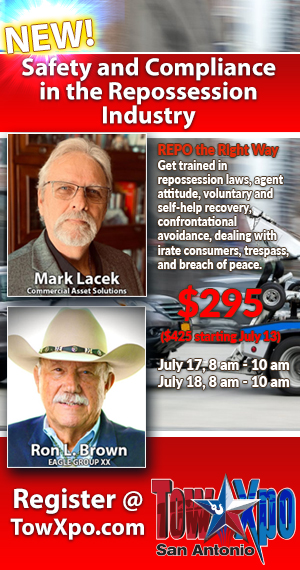
    There are various levels of repossession service providers. Some repossession companies receive thousands of assignments per month, and others receive only a couple of hundred. The number of repossession assignments per month will be up to you and how you decide to scale your repossession department. I am thrilled to announce I have been asked to introduce the Repossession Credentialing Seminar at the 2026 American Towman TowXpo in San Antonio, Texas. The seminar will consist of two days of fast-paced learning. Safety and consumer
    protection will be a part of the two-day, 2 ½ hour per day course. I am also thrilled to announce that repossession industry legend Ron L. Brown from the well-respected Eagle Group XX will join me. Ron is a highly sought-after speaker on repossession training, policy, and procedure, and will introduce his specifically designed credentialing training to both the San Antonio and Baltimore Shows. I will include in the seminar the advantages of providing commercial vehicle repossessions to the commercial lender clients.

    Ron and I will be bringing to you over 100 combined years of repossession knowledge.Ron L. Brown will instruct the attendees on Breach of Peace, GLBA, FDCPA and UDAAP violations as well as recognized standards in the repossession industry. Ron and I will discuss what it takes for the attendees to become more involved in the repossession process. Whether you are a repossession company or a towing company, you can expect access to many years of knowledge and experience. Looking forward to seeing all of you in San Antonio and Baltimore.

    Stay safe.
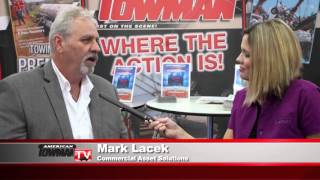
    Mark Lacek  
  • Repo Firm Launches Legal Fund to Challenge Police Towing Directive

    Giannone Services Inc., a division of Giannone Companies Towing Enforcement, has launched a GoFundMe titled Defend Philly Repo Rights Fund to support legal costs in two lawsuits against the City of Philadelphia alleging municipal overreach in repossession enforcement.

    The company says a state case seeks to block enforcement of a police directive requiring repossession agents to transport vehicles to district stations for inspection, while a federal suit alleges civil rights violations after its chief operating officer was detained in February 2026 for refusing to comply. Giannone argues state law only requires notice to police within 24 hours and that departmental directives cannot bind private contractors.

    Since 2020 the firm has challenged the policy claiming repeated harassment detentions and vehicle misclassification as stolen despite city attorneys acknowledging legal disputes The Pennsylvania Repossession Association says officials previously agreed the directive is unenforceable but have not issued updated guidance.

    COO Carmino Giannone said the lawsuits target policy, not police officers, with the intent on clarifying limits on police involvement in repossessions nationwide. To donate to this fundraiser

    Source: https://curepossession.com

     
  • Community Supports Milwaukee Towman Shot during Repo

    The Milwaukee towing community and local residents rallied in support of Alfredo Martin, a tow truck driver who was shot while repossessing a vehicle late Dec. 29.

    Martin, 29, was shot around 11:40 p.m. in Milwaukee’s North Division neighborhood, according to police. He was taken to Froedtert Hospital in Wauwatosa, where he continues to recover.

    On Jan. 1, a line of tow trucks formed a procession outside the hospital to show solidarity with Martin and his family. Videos and photos of the procession were shared online by Milwaukee Connections Towing & Recovery LLC, along with messages wishing Martin a speedy recovery.

    A GoFundMe created to help cover Martin’s medical expenses and time away from work had raised nearly $13,000 as of Jan. 2. The fundraiser states that while Martin is expected to make a full recovery, his family faces significant medical and financial challenges ahead.

    Milwaukee police say a 23-year-old man is in custody with charges pending, and investigators are searching for another known suspect. Anyone with information is urged to contact police or Crime Stoppers.

    Source: https://www.jsonline.com  
  • Car Repossessions Surge in San Diego

    Car repossessions are rising sharply across San Diego County as more families fall behind on auto loan payments, reflecting a broader national trend. According to the Federal Reserve, 3.88% of auto loans were delinquent in the third quarter of 2025 — the highest rate since 2010 — with subprime borrowers hit hardest.

    Tow truck drivers say repossession calls have surged. Alex Alvarez of Active Recovery Services said his daily workload has jumped from two or three vehicles to as many as 10 assignments a day. Repossessions often happen quickly to avoid confrontations.

    “It has to be fast, because people will want to get in the vehicle before we hook it up,” Alvarez said.

    Construction worker Ezekiel Rodriguez said he was stunned when the car he was driving — owned by his girlfriend — was towed just days before he was set to start a new job. Without the vehicle, his ability to work is uncertain.

    Alvarez said the job comes with emotional strain.

    “This job is not easy; it’s not for everyone,” he said. “I’ve had a lot of employees come and go. They tell me the same thing — it’s not for them — but if we don’t do it, another repossession company will.”

    Source: https://www.nbcsandiego.com

     
Translate Page
Contact Us
© 2026  Tow Industry Week/American Towman Media, Inc.         . .