-

By Randall C. Resch
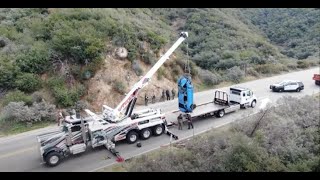
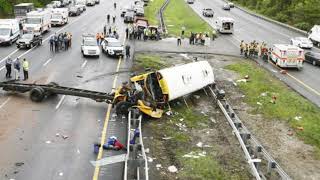
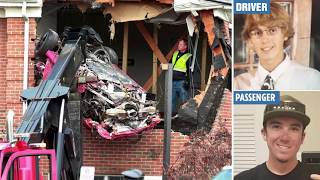
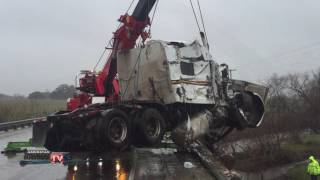
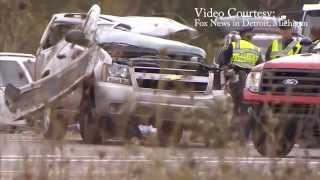
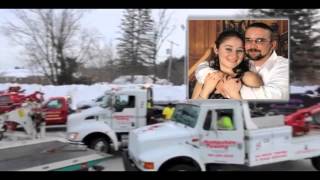
In July 2024, a large, 30,000-pound tracked bulldozer was being transported atop a steel-deck commercial trailer. As the truck and trailer combination allegedly negotiated a right-hand curve on the highway, the dozer broke free and skipped off the trailer's deck. Tragically, it rolled onto a pickup truck pulling a ski boat, killing the pickup's driver and his teenage daughter while injuring two other passengers.
If you've followed industry news, you're aware of this incident and likely read that overwhelming testimony convicted the truck driver. In all investigations and subsequent lawsuits, determining fault occurs when investigative details prove sufficient wrongdoing.
If you think gambling with improper safety will keep you out of prison, think again. To my point, a recent headline described every tower's nightmare: "Dad and daughter crushed to death by bulldozer that rolled off truck, landing on their vehicle after driver failed to properly secure it."
There's no doubt this tragedy raised serious questions about proper securement and the processes necessary to keep a dozer solidly in place. However, this narrative isn't just about that case.
In March 2026, another fatal towing-related incident occurred in Philadelphia when a vehicle allegedly detached from a light-duty wrecker. The freewheeling, uncontrollable car rolled into the path of an oncoming motorcycle. Its rider was killed instantly, and the tow truck fled the scene. The driver was later identified.
This narrative is directed at towers who shortcut proper securement and initiate towing or loading practices that aren't approved or considered safe by industry standards. If you're that tower sidestepping proper vehicle securement, why are you risking it all?
Just Showing Off?
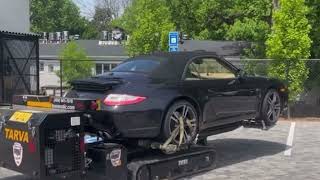
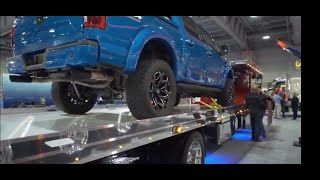
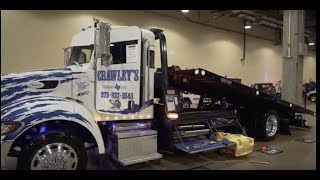
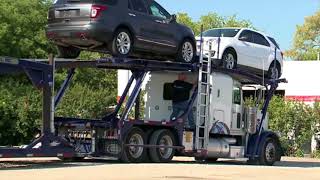
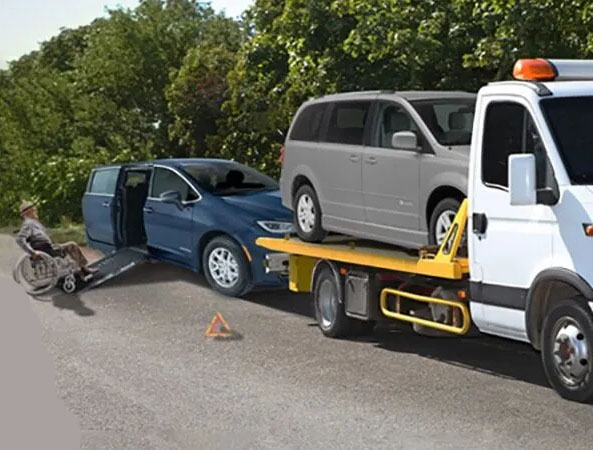
In less than a week's time, several towers posted photos of themselves loading carriers "two up," showing one vehicle atop the deck and a second vehicle "floating" behind in the carrier's wheel lift. I direct this narrative to towers infected with the wrong mentality: "If it fits, it ships."
I'll never understand why towers post photos or videos of themselves doing something questionable, unacceptable, or illegal. I often blame the industry for not having a universal set of standards that mandates acceptable towing practices. But that's a topic for another time.
The reality is that some towers lack an understanding of the safety practices the industry demands. Sharing social media posts of illegal or unsafe practices can potentially lead to devastating consequences should something go wrong.
Perhaps those posting these images are simply looking for instant gratification and fail to realize that "an accident is the product of the unknown." Unfortunately, when viewing photos and videos of Hollywood moves and illegal practices, another reality becomes obvious: in most cases, accidents are preventable.
Don't Be Invincible
Using the "two-up carrier load" as an example, while it may look kinda' cool, where is it suggested—or instructed—that floating a vehicle behind a carrier in the wheel lift is approved by industry training? Where is it written in any tow equipment manufacturer's operator's manual?
When photos like those posted on industry forums are worth a thousand words, floating vehicles off the pavement goes against the grain of what's safe and proper. These are the same types of photos that often become evidence in fatality investigations and courtroom proceedings. Why would someone purposely post potential future evidence against themselves?
In simple terms, floating vehicles in wheel-lift devices creates dangerous and recognizable risks. Should an unfortunate incident occur, a subsequent investigation will likely consider the following:
-- First and foremost, a dangerous action-reaction condition is created when extended weight far behind the carrier's rear axle reduces braking capability.
-- That same action-reaction effect decreases steering control.
-- The lifted vehicle's rear-end weight is "killing the deck," with the potential to crack the carrier's understructure and deck welds.
-- When wheel lifts are extended beyond the tailboard to accommodate a vehicle's length, they may violate vehicle code laws regarding rear overhang, overall length, and factory lighting requirements.
-- If raised sufficiently above ground level, the suspended vehicle creates an extremely dangerous condition for following traffic because bumper protection is absent in a rear-end collision.
Why Take Chances?
Towers, take heed. The industry's history describes towing, recovery, and repossession as among the most dangerous professions based on documented fatalities. Since Ernest Holmes introduced the first wrecker more than 110 years ago, hundreds of towers have been killed in on-the-job incidents.
To date, I've archived 1,938 operator fatalities in the U.S. and internationally. The numbers prove towers are at risk. But what about the unfortunate incidents where a tower's actions take the lives of innocent people?
It's a fact that when safe practices aren't followed—or are intentionally ignored—innocent people are injured and killed. I'm hoping these words of reality reach towers determined to make their own rules while showing off on industry forums. For towers and industry influencers who think training is a joke and unnecessary, may your continued risk-taking never lead to a preventable tragedy.
For the unfortunate tower involved in the Utah fatality, he reportedly was sentenced to four to 23 years in prison on charges related to the crash. My advice is simple: Get back to following the industry's best practices and leave the idiocy behind.
Hopefully, no other innocent victims will lose their lives because of a tower's wrongful actions. If you support the "If it fits, it ships" mentality, you're putting everyone else at risk.
Operations Editor Randall C. Resch is a retired California police officer, former towing company owner, and longtime industry advocate. As a consultant and trainer, he authored and teaches tow truck operator safety courses approved by the California Highway Patrol. During his 57 years in the towing and recovery industry, he has contributed more than 800 safety-focused articles to American Towman Magazine, TowIndustryWeek.com, and POLICE Magazine. He is a frequent seminar presenter and beauty pageant judge at tow shows. In 2014, he was inducted into the International Towing and Recovery Industry Hall of Fame, became the third recipient of the industry's Dave Jones Leadership Award, and serves as a member of American Towman's Safety Committee.
Email Randy at rreschran@gmail.com.
-
By Randall C. Resch
Fifty years ago, moving vehicles in packed tow yards was accomplished by dangling cars from a wrecker's single cable on an outstretched boom. While that may seem archaic today, it served its purpose when yard machines and specialized attachments weren't available.
To reach those "needle-in-the-haystack" cars, talented towers could relocate dozens of vehicles in an hour. "Danglin'" cars while backing up was a skill that took years to master. Today, however, forklifts and skid steers outfitted with wheel-lift attachments can accomplish the same task in a fraction of the time.
These attachments help tow companies achieve greater operational efficiency while improving vehicle inventory management. For owners trying to maximize space in crowded storage yards, wheel-lift attachments are a smart investment. As with any equipment purchase, careful research is the key to selecting the right unit for your operation.
In the News
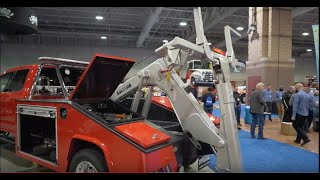
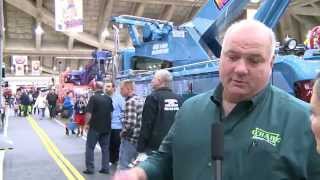
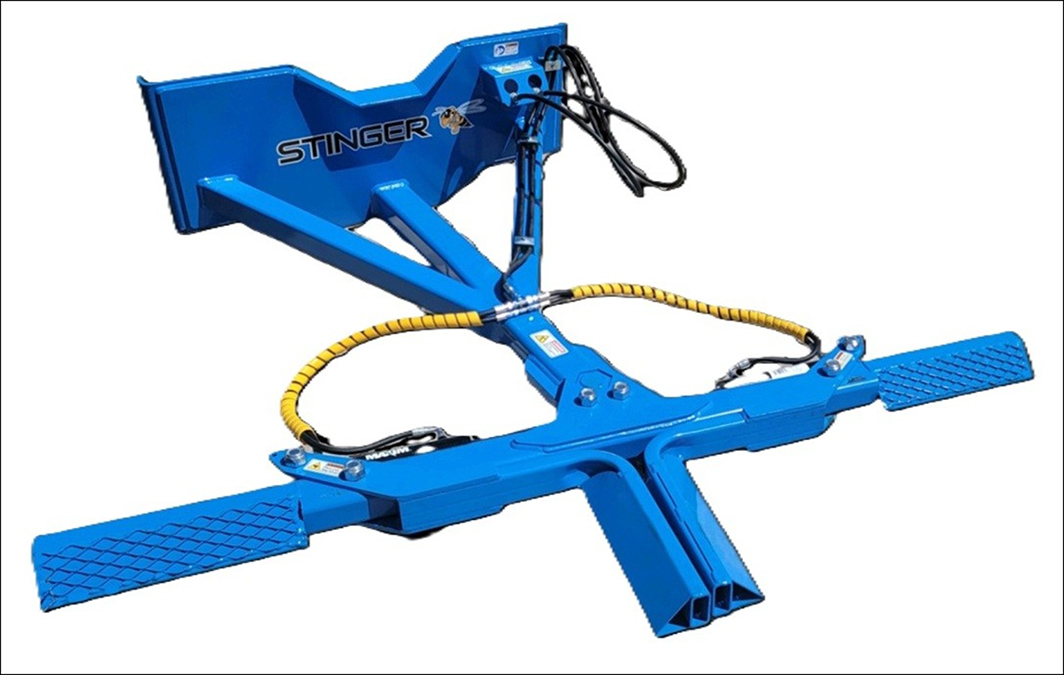
At the American Towman Exposition in Las Vegas, a quick-attach wheel-lift unit for skid-steer loaders caught my attention. Called the Stinger, it is built by Mnkota Manufacturing and finished in bright blue paint with its distinctive angry bee logo—a fitting look for companies seeking to modernize yard operations.
My friend Rene Jiminez of B/A Products recently shared a forum post highlighting Mnkota's wheel-lift attachment. He wrote, "I would love to try one at our impound lot when we need to reorganize for space or set up for an auction."
His comments inspired this overview for companies considering adding a lift attachment for yard management.
Pros and Cons
There are many factors to consider before deciding whether a wheel-lift attachment is right for your operation. While these devices improve efficiency, improper use can result in costly damage, injuries, or insurance claims.
An experienced operator can safely move vehicles quickly. An inexperienced or careless operator, however, creates the potential for property damage, serious injury, or even death. Convenience should never come at the expense of safety.
Each year, countless forklift-related injuries occur because of unsafe operating practices. Common causes include inadequate training, poor enforcement of safety procedures, and operators who lose focus during routine work.
Consider the Design
Every lift attachment comes with operating limitations that users must fully understand. Hydraulic hoses can be snagged or damaged, and spring-loaded wheel pincers may become overstretched if they catch on a vehicle's undercarriage.
Easily Snagged
Every attachment has its own operational personality—and its own potential to cause damage. This is especially true when moving wrecked vehicles with hanging body panels, damaged suspension components, or sagging exhaust systems.
On spring-style wheel pincers, broken or overstretched springs prevent the pincers from opening and closing properly. A simple bungee cord often serves as a temporary replacement until repairs can be made.
Size Matters
Working between tightly parked vehicles requires compact equipment capable of fitting into narrow rows. The host machine should also be heavy enough to keep its rear wheels firmly on the ground while lifting vehicles.
No Extendability
Unlike conventional wheel lifts, these attachments do not telescope. While most vehicles can be approached head-on, larger pickups and SUVs limit maneuverability in tight quarters. Aggressive turns can scrape bumpers or damage taillights. When this happens, it's usually operator error—not a flaw in the equipment.
Blown Tire Syndrome
Aggressive operation can puncture tires when the attachment's pointed swiveling pincers stab the inside sidewall. Slow, controlled movements allow the lift bar to rotate smoothly beneath the tire while remaining close to the ground. Keeping the attachment low and moving deliberately greatly reduces the risk of tire damage.
Preventing Rollaways
Because no one is seated behind the steering wheel, vehicles being moved are vulnerable to rolling away if they slip from the lift. Since most vehicles are transported in neutral, they become freewheeling and uncontrollable if released.
Operators should move slowly during pickup, lifting, and transport. For additional security, attach a J-hook or safety chain between the lift and the vehicle whenever possible.
Mirrors, Backup Alarms, and Lighting
For maximum safety, equip yard machines with rearview mirrors, rear-facing work lights, and a functioning backup alarm to warn pedestrians whenever the machine is in motion.
Clear the Area
Before moving any vehicle, ensure the work area is clear of pedestrians. Operators must constantly monitor their surroundings to prevent anyone from entering the machine's path.
Essential Safety Equipment
Seat belts should always be worn, regardless of the machine being operated. Forklift operators must receive OSHA-required, equipment-specific training and carry proof of certification.
Selection Choices
Choosing the right wheel-lift attachment depends on your operation's specific needs and the factors discussed above. Carefully compare available models, features, lift capacities, and compatibility with your existing equipment.
While this article isn't intended to recommend a specific product, investing in a quality lift attachment can be easily justified by the increased efficiency it brings to yard operations.
Just remember: even the best equipment can't compensate for poor operating technique. Otherwise, you may discover why the vehicle's exhaust pipe is suddenly packed full of rocks and dirt.
-
By Randall C. Resch
As a heavy operator working active recoveries atop rural bridges, have you ever considered the strength and integrity of the bridge itself?
On June 13, 2026, a passenger car simply drove across a rural bridge in Northern California when the structure suddenly collapsed. Fortunately, the driver suffered only minor injuries rather than being trapped or swept away.
According to local news reports, the California Highway Patrol stated, "It's unclear at this time why the bridge collapsed." CHP also reminded motorists, "When traveling on rural roadways, remain alert to changing road and bridge conditions."
That incident serves as an important safety reminder for towers who position wreckers on rural bridges during recoveries.
For operators responding to water recoveries near or beneath bridges, I pose this question: Do you stop to consider whether the bridge will safely support the combined weight of your wrecker, casualty vehicle, and recovery forces? If a bridge can fail under the weight of an ordinary passenger car, what confidence do you have placing a fully loaded heavy wrecker on it?
Unfortunately, bridge integrity isn't a topic commonly discussed during formal recovery training or in-house instruction. While operators aren'tbridge engineers, there is one safety technique every recovery professional should practice before setting up: Have a goal—get out and look.
Wreckers Gone Fishing
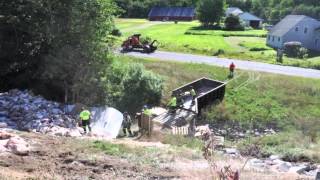
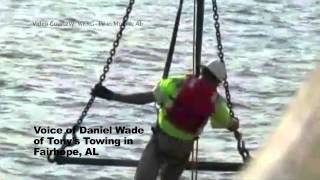
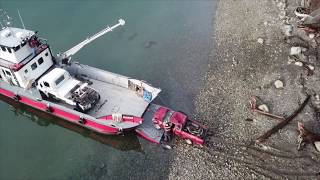
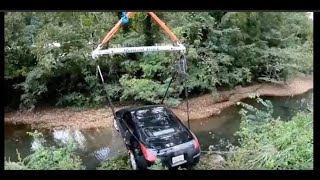
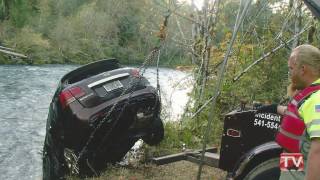
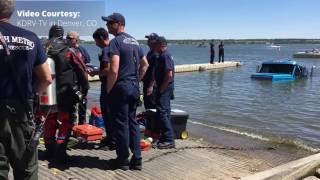
An older YouTube video showed a rotator recovering submerged vehicles from a rural waterway after a fisherman located them using a Garmin fishfinder. Law enforcement responded, followed by a dive team and heavy recovery equipment.
In cases involving submerged vehicles, investigators must determine whether the vehicles are connected to criminal activity, theft, insurance fraud, or even missing-person cases. Preserving evidence is often a priority, and it's easy for recovery personnel to become focused solely on removing the vehicles.
That's when broader scene safety can be overlooked.
Questioning Integrity
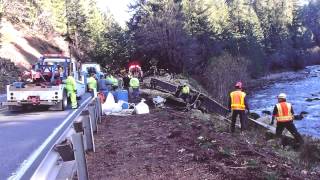
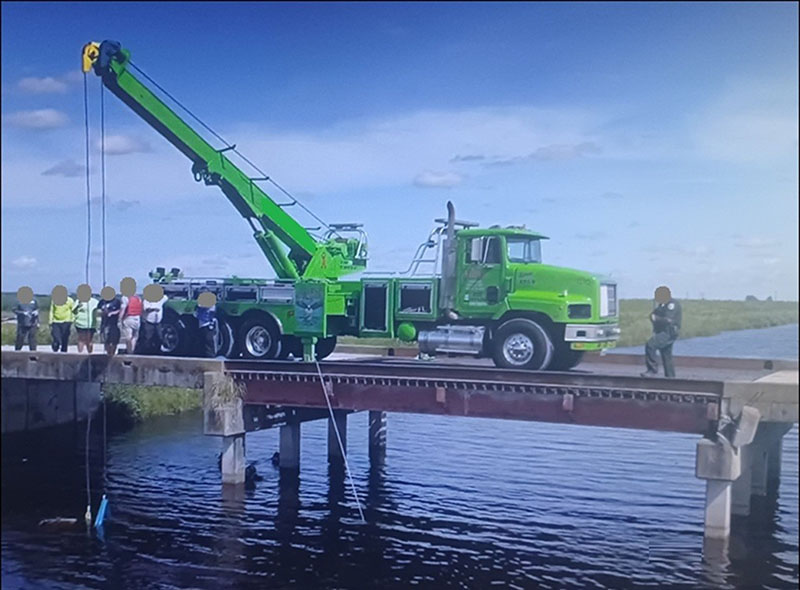
The video showed three heavily submerged vehicles being recovered individually. The rotator was positioned near the middle of a rural bridge while performing side lifts.
For just a moment, consider the total weight involved—not only the rotator itself, but also the added weight of waterlogged vehicles, recovery forces, and dynamic loading during the lift.
Several people stood beside the heavy wrecker observing the recovery. If the bridge had failed, they would have been directly in harm's way.
As I watched the footage, my "spidey senses" went off. A newer-looking steel section appeared beneath the rotator, but nearby was a large area of broken concrete only a short distance from the truck's front axle. Whether or not the damage was structural isn't the point. The question is: Did anyone stop to evaluate the bridge before committing a heavy recovery operation?
Unseen Peril
Had the bridge collapsed during the recovery, the combined weight of the rotator and suspended vehicle could have sent the truck into the water, with potentially catastrophic consequences for both operators and bystanders.
Could the recovery have been performed differently? Perhaps the rotator could have remained on solid ground and winched the vehicles up the embankment instead of positioning directly on the bridge.
That isn't meant as criticism of the crew involved. Rather, it's a reminder that recovery professionals should evaluate every available option before committing equipment to a potentially compromised structure.
See the Simple
Sometimes the simplest hazards are overlooked because all attention is focused on the recovery itself. Bridge condition should be part of every scene assessment, especially on rural roads where aging infrastructure may have unknown weaknesses.
As experienced towers, we must look beyond the casualty vehicle and identify every potential hazard before work begins. The old saying reminds us, "If you see something, say something." But first, you have to see it.
This recovery ended successfully, but it also serves as a valuable reminder. Operators can't assume that every rural bridge is capable of supporting today's increasingly heavy recovery equipment. When safety is in question, stop, assess the situation, and adjust the recovery plan accordingly.
Operations Editor Randall C. Resch is a retired, veteran, California police officer, former tow business owner and industry advocate. As consultant and trainer, he authored and teaches tow truck operator safety courses approved by the California Highway Patrol. For 57-years, he has been involved in the towing and recovery industry. In 29-years, he has contributed more than 800-safety focused articles for American Towman Magazine, TowIndustryWeek.com and POLICE Magazine. He is a frequent seminar presenter and beauty pageant judge at tow shows. In 2014, he was inducted to the International Towing and Recovery Industry Hall of Fame, was the 3rd recipient of the industry's "Dave Jones Leadership Award," and is a member of American Towman’s Safety Committee.
Email Randy at rreschran@gmail.com.


 By Randall C. Resch