-
By Rich Holland
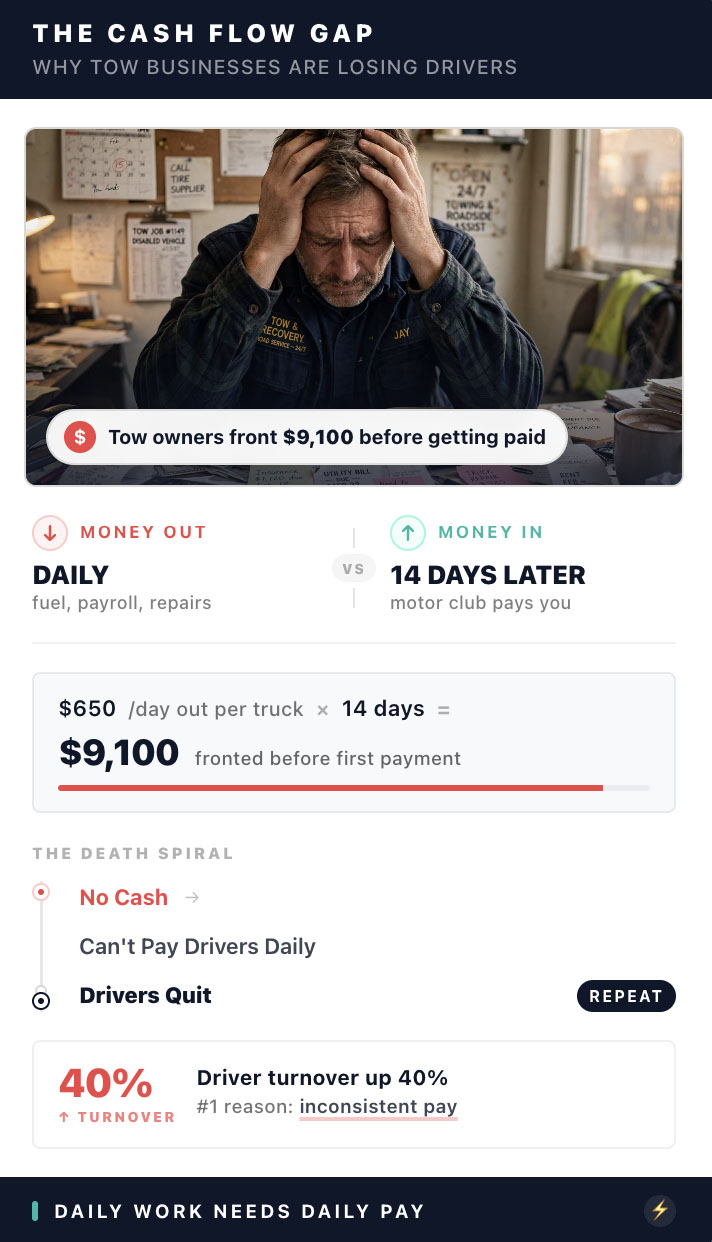
All roadside service providers know the math. They roll out at midnight, change a tire on the highway, run a lockout call in the rain, haul a sedan off the interstate. Typically, near the end of the work week, most tow operators have racked up fuel, equipment wear, and hours of labor. And then the wait begins, two weeks, more or less, for the check to show up.
This gap has become so deeply ingrained in the industry that most tow operators no longer recognize it as a deficiency. It has been accepted as the status quo. But that does not mean it’s acceptable, and it is certainly not effective.
Much of the towing and roadside service industry is built on independent operators and small fleets running on tight margins, carrying overhead costs that do not wait for payday. Fuel bills come due. A truck that needs a repair can’t always be postponed. The mismatch between daily costs and a delayed revenue stream is not just an inconvenience. For many owner/operators, it is a primary reason to hesitate before accepting additional dispatches, expanding network partnerships, or even continuing in the business altogether.
The Retention Problem
The roadside service sector has a well-documented driver retention problem. The issue usually involves wages and working conditions. All of this is real, but underneath, largely unexamined, is the financial dynamic: independent roadside service providers are running a daily-cost business on a bi-weekly (or longer) payment cycle.
An owner-operator takes dispatches, fulfills every call within spec, and builds the relationship. And for two weeks they float the costs out of their own pocket, relying on reserves or credit to cover the daily financial demands of the business.
For operators with strong cash reserves or access to a line of credit, this shortfall is manageable. For a significant portion of the industry, however, neither option is available. As a result, it creates a persistent low-grade financial strain that influences nearly every operational decision—which dispatches to prioritize, the provider relationships to invest in, and ultimately, even whether to remain in the game.
The bi-weekly standard was not intended to create this problem. It was just the way accounting systems worked when the industry built its payment infrastructure. The operational logic made sense in its era. While the era has changed, the standard has not.
What Tow Operators Actually Need
Ask any experienced roadside assistance provider what they want from a partner relationship and the answers are consistent: steady dispatch volume, fair compensation, technology that makes the job easier and, perhaps most critical, a payment schedule that reflects the day-to-day realities of running an operation, where costs hit every single day.
The financial relationship between motor clubs and their service provider networks is not merely an administrative detail; it serves as a meaningful indicator of how that partnership is valued. When a motor club pays providers directly and in a timely manner, it signals respect for the operator’s cash flow and operational demands.
The impact shows up in dispatch behavior. When two dispatch requests land at the same time, tow operators make a choice. That choice is shaped by which partner pays reliably, communicates clearly, and has demonstrated through actual behavior that it values the operator on the other end of the call. Payment speed stands as one of the most visible and consequential determinants in this dynamic.
Daily Pay - The Effects of a Simple Idea
The concept is straightforward. Pay drivers for completed work each and every day, rather than hold payment for two weeks.
Payment technology to support this is no longer the barrier to improving payment practices. Integrated roadside service platforms can connect dispatch management, service verification, invoicing, payment processing, and financial reconciliation into a single digital workflow.
Instead of relying on multiple manual handoffs between operations and accounting, each completed service event can move automatically from dispatch to payment eligibility. A provider accepts a dispatch digitally, updates arrival and completion statuses in real time, and submits supporting documentation through a mobile workflow. The system can then validate the work against agreed pricing and service requirements, allowing payment to be approved far more quickly than traditional batch-processing models.
What is currently lacking is the willingness to update payment practices to align with connected operational capabilities. When payment aligns with the actual rhythm of the business, the gap between cost and cash disappears. Credit lines stop absorbing two weeks of operational float. The owner-operator who was hesitant to take on more dispatches now has a reason to lean in.
Daily pay is not a loyalty incentive—it is a fundamental redesign of how the financial partnership works.
A motor club with a dense, loyal, financially stable service provider network can dispatch faster, cover more territory, and deliver more consistent service quality. The economics of driver retention and the economics of dispatch performance are the same, just viewed from different sides of the same coin.
What the Industry Should be Asking
The roadside service industry faces no shortage of challenges. The complexities of EVs are changing what roadside calls look like. Flatbed-only towing requirements and range-depletion calls are creating new demands on training and equipment. Driver recruitment is competing with industries that have invested heavily in benefits and working conditions.
Against that backdrop, the question of when drivers get paid can seem secondary. But it’s not. It is the financial foundation of every other decision.
Motor clubs and roadside administrators that want loyal, high-performing service provider networks need to examine whether their payment structures are built for the operators they want to attract, or for the accounting systems they built 20 or more years ago. These two are clearly not the same.
The roadside service industry runs on people who show up. Every dispatch, every midnight call, and every weather event that overwhelms the system can be impactful. The operators who keep showing up deserve a financial partnership built around the reality of their business.
Daily pay is a start. The broader conversation about what genuine motor club partnership looks like is long overdue.
Author bio: Rich Holland is the Chief Executive Officer of Nation Safe Drivers (NSD), a trusted provider of roadside assistance and vehicle protection solutions. Since joining NSD in the fall of 2023, Rich has focused on advancing technology-enabled services and strengthening partner-driven growth across automotive, RV, marine, and powersports markets. He brings decades of executive leadership experience across automotive technology, finance & insurance, and high-growth organizations.
-
By Randall C. Resch
A six-year tower wanted to be his company’s next supervisor, noting, “I’m the best candidate we’ve got for the position,” while describing his fellow drivers as “…a bunch of incompetent twits!”
He asked if I’d share some direct “pointers” on what it takes to be considered for a supervisory position. The company he worked for was considering hiring a driver manager, either from within or through an outside search.
Having worked for a competitor, I remembered him as a tower with better-than-average industry skills and one who always displayed a noticeable superiority complex. He was always ready to work and had all the equipment expected of him.
Compared to other drivers, I considered him “the exception to the rules.” He didn’t whine or complain, accepted every call assigned to him and eagerly worked past quitting time. His dispatchers loved him, and he was well-liked by the other drivers.
Although I considered him “ahead of the pack,” life was all about “him.”
Why Not Me?
As we talked, I heard his enthusiasm as he described the supervisor he’d likely become. He had ideas and visions for making the company better. His motivation was in line with a supervisory position—until he said, “The boss doesn’t freakin’ know what he’s talkin’ about!”
I felt that level of disdain could be hiding a dubious personality trait.
While I’m inclined to agree that some bosses don’t know what they’re talking about, some have still managed to build companies big enough to have employees and solid enough to stay in business. Somewhere within the boss’s “inability” to learn the industry’s nuts and bolts, he had managed some level of success running the company.
When I heard, “The boss doesn’t know what he’s talkin’ about,” I perceived an active ego that needed a lesson in reality.
So I asked if we could talk frankly about what steps might help his search. I thought I’d first address his attitude to see if that might stand in his way.
What I felt he didn’t understand was that, although his skills outpaced those of his peers, attempting to override the company owner or current management team wasn’t the path to making friends and influencing people.
Step one: “Dude, read the room and see whose name’s on the door.”
Hold the Door
I didn’t like the manner in which he rebelled against his boss’s way of doing things or the company’s rules.
I asked him, “Who are you to change the rules?” And, “What’s the possibility or potential that you’d even be considered?”
If “urge” was his driving force toward becoming a supervisor, wouldn’t becoming an owner better suit his ideas?
When considering a supervisory position, applicants have to have skills—and be skilled. Being a driver for five, ten or even fifteen years might make someone a great operator, but the responsibilities of a tow supervisor also include increased hours, interaction with employees, workload, stress and overload.
There’s so much more.
An all-around, all-inclusive supervisor should:
- Be a natural leader experienced in training and supervising others.
- Demonstrate the patience, tolerance and interpersonal skills necessary to deal with a multitude of personalities, abilities and attitudes.
- Effectively lead employees on a daily basis.
- Be experienced in handling damage claims, law enforcement contracts and all facets of business operations.
- Be ready to jump in a truck and handle calls when needed.
- Have the respect of peers and personnel.
The road to supervisor is a long process that typically comes with time and grade. When towers have abilities beyond their peers, some company owners recognize that experienced candidates have more to offer.
But all talk and no action ain’t impressive!
The ideal supervisor doesn’t hide behind a desk. It doesn’t work that way.
Humility Is Endearing
If a supervisory position isn’t openly discussed or advertised, ask the HR manager or owner for an informal sit-down. Bring a “neatly prepared resume” and humbly “sell the fact” that you’ve got something to offer.
Rest assured, a little well-emphasized ability is far different from arrogance and conceit.
Positive thinking helps demonstrate that you’re a qualified supervisor while continuing to build your industry skills. A complete resume makes for a better, well-rounded applicant. Sign up for supervisory courses and seek topic-specific industry training. Ask yourself: What makes you the better candidate?
Your work history should demonstrate the knowledge and experience needed to meet the company’s needs. And somewhere in that education and experience, an overactive ego may need to be tempered with humility.
At conversation’s end, I think he and I found some common ground. I told him that changing his attitude would better serve his chances of being selected.
I advised him to get humbled, stay motivated and not give up on himself.
I reminded him to be fully aware that it’s the boss’s name on the door, not his.
And yes, “boss is a four-letter word,” but it’s they who hold the proverbial keys.
-
Randall C. Resch
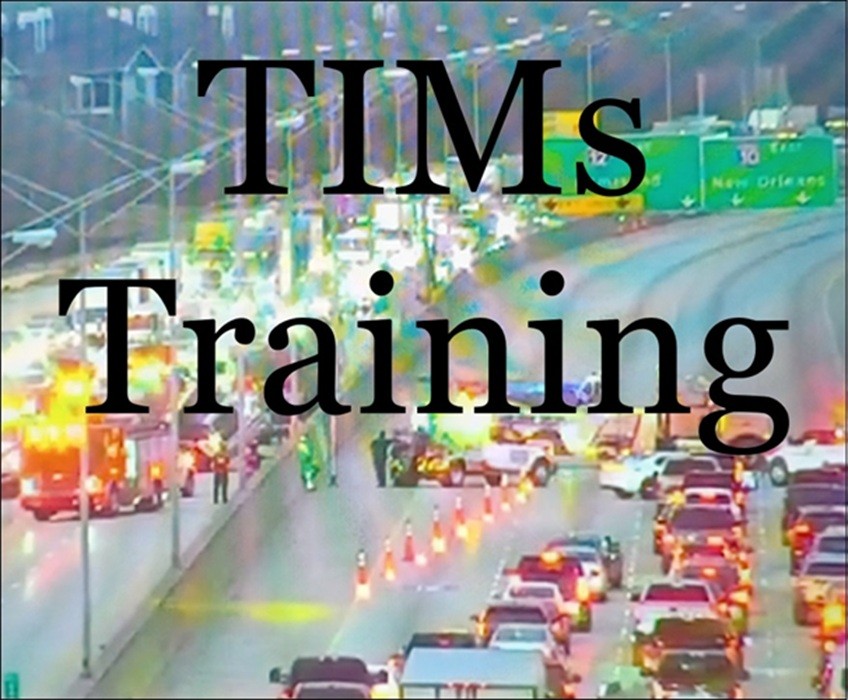
At the Texas Tow Show in July 2026, I asked a room full of owners, “How many companies sent their towers to TIM training?” Only a handful raised their hands. Considering Texas has the second-highest fatality rate of all states, you’d think TIM training would be a doable priority.
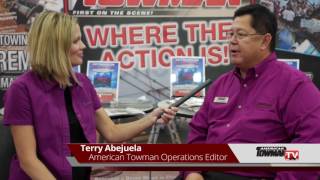
Years ago, Towman’s, Terry Abejuela and I attended the National Traffic Incident Management “Train the Trainer” course at Visalia’s Fire Department in Visalia, California. Having worked in responder industries for more than 50 years, this particular TIM course was the best safety and survival course I’ve ever attended.
Forty-eight responders attended, representing CalTrans, fire departments, law enforcement, California Highway Patrol, and seven tow companies. Having various disciplines participate together provided different perspectives on highway response as a group effort, far beyond responsibilities assigned only to tow operators.
The importance of on-scene safety was made noticeably clear by TIM instructors Ron Moore and Grady Carrick, both veteran police and fire administrators. Ron and Grady are commended for their commitment to training and dedication to a program I describe as “potentially life-saving.”
Course topics included:
- TIM Fundamentals and Terminology
- Non-Traffic Side Safety
- Notification and Scene Size-Up
- Safe Vehicle Positioning
- Command Responsibilities
- Traffic Management
- Special Circumstances
- Clearance and Termination
Training With Purpose
TIM stresses the importance of “Quick Clear” methodology, including problems caused by congestion, depleted emergency assets, secondary crashes, Haz-Mat, medical response, extrication, financial impacts, and tow and recovery.
Discussions focused on the importance of law enforcement providing accurate dispatch information to tow companies. Accurate locations and equipment needs are paramount. The intention? Towers should arrive on-scene with the proper equipment and trained operators based on a detailed assessment by law enforcement.
Day two’s tabletop exercises involved participants working through scenarios relating to arrival assessment, vehicle placement, Quick Clearance priorities and problem solving. Attendees also went outside for situational-awareness activities demonstrating angled and linear placement of fire trucks and arrow-board trucks, effective cone-flare patterns, and how to safely enter and exit working vehicles.
Command and Confidence
Comments by instructors and attending law enforcement officers praised tow operator abilities. I felt proud of what we towers do after seeing the total presentation on incident management. In fact, I sat with a goofy smile nearly the entire time.
TIM’s nationwide program is available to highway responders. Currently, some states require towers at all levels to attend four-hour traffic incident management courses. Accordingly, operators serving California Highway Patrol Tow Service Agreements (TSA) require a TIM certificate in the operator’s file.
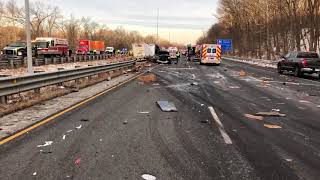
Fatality numbers confirm highway responders are at great risk. Consider that approximately 12 police officers are killed monthly across the U.S., along with five fire department personnel. It’s estimated that more than 120 Public Works/Tow/DOT/Safety Patrol workers are killed each year. At the highest count, as many as 32 towers were killed in 2012 industry-wide.
Don’t listen to imprecise reporting claiming “one operator is killed every six days.” That’s bunk! However, there’s an industry expectation that through repetitive training, towers can work smarter and lower fatality numbers.
The course videos and pictures demonstrated the importance of working on the “non-traffic side” to reduce pedestrian strikes. TIM demands towers replace old highway attitudes with awareness that provides tactical advantages.
Taken to Heart
Distracted driving won’t go away. Not even all the enforcement in the world will correct or eradicate distracted driving, DUI, extreme weather conditions, excessive speeds for conditions, and other factors that create crashes and ultimately kill or maim innocent responders and towers.
A “live-taught” TIM course, at its basic level, is outstanding training that gives towers a better understanding of the carnage caused by distracted driving. Move-Over laws don’t work alone. On-scene survival is the responsibility of every responder, regardless of position or discipline.
I urge tow company owners, tow operators and dispatch staff to attend a TIM course to fully understand processes and techniques that could mean the difference between coming home alive and not coming home at all.
A free, four-hour TIM course is available online through the National Traffic Incident Management Responder Training Program.
Operations Editor Randall C. Resch is a retired, veteran, California police officer, former tow business owner and industry advocate. As consultant and trainer, he authored and teaches tow truck operator safety courses approved by the California Highway Patrol. For 57-years, he has been involved in the towing and recovery industry. In 30-years, he has contributed more than 800-safety focused articles for American Towman Magazine, TowIndustryWeek.com and POLICE Magazine. He is a frequent seminar presenter and beauty pageant judge at tow shows. In 2014, he was inducted to the International Towing and Recovery Industry Hall of Fame, was the 3rd recipient of the industry's "Dave Jones Leadership Award," and is a member of American Towman’s Safety Committee.
Email Randy at rreschran@gmail.com.










 By George L. Nitti